
Roof failures rarely start with one dramatic moment.
They begin with small installation decisions that seem minor at the time.
Metal roofing is widely chosen across Maine and New Hampshire for its durability, snow-shedding ability, and long service life. But when metal roof installation is handled without proper regional planning, homeowners often experience leaks, excessive noise, and performance problems that should never occur with a correctly built system.
A metal roof is not just a surface material. It is a structural and energy system that must perform under heavy snow loads, freeze-thaw cycles, and wide temperature swings. When mistakes are made during metal roof installation, those weaknesses often reveal themselves years later.
At Octagon Construction and Energy, we evaluate existing roof systems and design metal roofing assemblies that meet performance expectations and protect long-term property value.
Why Metal Roof Problems Usually Start During Installation
Metal roofing systems are engineered to move, breathe, and shed water efficiently.
They only work when every layer is planned correctly.
Many problems blamed on metal roofing are actually caused by improper metal roof installation. In Maine and New Hampshire, this often means ignoring snow load requirements, thermal expansion allowances, or ventilation standards outlined in the Maine Uniform Building and Energy Code and New Hampshire code amendments tied to the 2021 IECC.
When shortcuts are taken during installation, issues may remain hidden until winter conditions expose them.
Improper Fastener Placement Creates Hidden Leak Paths
Fasteners are one of the clearest visual indicators of installation quality.
They are also one of the most common failure points.
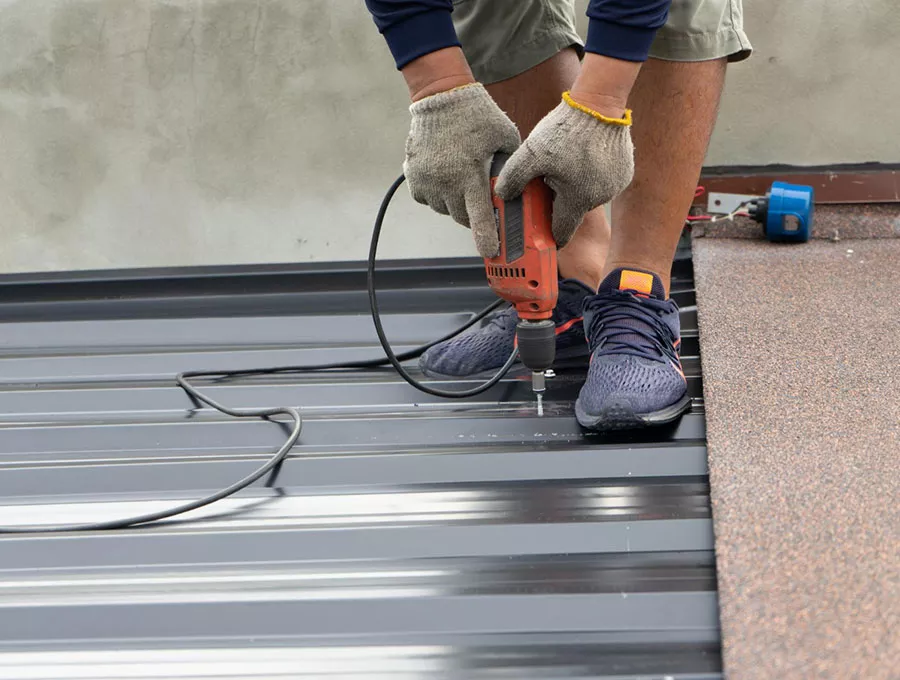
A frequent mistake in metal roof installation is incorrect fastener pressure. Overdriven fasteners crush neoprene washers until they resemble a flattened donut, breaking the waterproof seal. Underdriven fasteners leave visible gaps that allow water to travel directly into the roof deck.
Common results include:
• Moisture intrusion at fastener lines
• Rust forming around screw heads
• Wind-related panel movement
• Premature gasket failure
During inspections, our team often identifies failures simply by observing washer deformation and fastener seating. Properly installed fasteners sit flush without compression damage and remain flexible through seasonal movement.
Ignoring Thermal Expansion Leads to Noise and Panel Stress
Metal roofing in Maine and New Hampshire experiences extreme temperature swings.
From subzero winter nights to summer heat approaching 90 degrees, expansion is unavoidable.
When metal roof installation does not allow for controlled movement, homeowners often hear popping, creaking, or sharp snapping sounds. These noises occur when panels bind against framing or fasteners instead of sliding as designed.
Professionally engineered systems address this using standing seam clips or oversized fastener slots that allow movement without stress. Without these measures, panels may oil can, fasteners may shear, and noise becomes constant.
For this reason, Octagon Construction and Energy typically recommends standing seam systems for Maine and New Hampshire climates. Unlike exposed fastener roofs, standing seam systems eliminate hundreds of penetration points and allow silent thermal movement across the roof surface.

Poor Underlayment Choices Increase Ice Dam Risk
Metal roofing is often selected to reduce ice dams.
But incorrect detailing can still allow water intrusion.
One major mistake in metal roof installation is improper eave flashing and underlayment coverage. During freeze-thaw cycles, melting snow can back up beneath panels if ice-and-water protection does not extend properly beyond the heated envelope.
Failures here often result in:
• Water intrusion behind fascia boards
• Staining along exterior walls
• Moisture saturation in roof decking
• Leaks appearing far from the roof edge
Ice dam prevention must be treated as a system. Underlayment, flashing, ventilation, and insulation must work together to protect the structure.
Insulation Gaps and Thermal Bridging Cause Noise and Heat Loss
Metal roofs are often blamed for noise when the real issue exists below the panels.
Loud rain or wind noise is usually caused by insulation gaps, air leaks, or thin roof assemblies. Metal is a strong conductor. Without a thermal break, the roof system can pull heat out of the home in winter, a phenomenon known as thermal bridging.
Effective metal roof installation must integrate with the home’s thermal envelope. High R-value insulation, proper air sealing, solid decking, and quality underlayment reduce both noise and heat loss.
This is where Octagon Construction and Energy’s energy-focused approach matters. A correct insulation strategy solves acoustic and efficiency problems simultaneously.
Inadequate Ventilation Creates Moisture and Performance Issues
Ventilation is not optional in metal roofing.
It is essential for durability and indoor comfort.
When ventilation is overlooked during metal roof installation, warm interior air becomes trapped beneath the roof system. This leads to condensation, moisture accumulation, and uneven thermal movement that increases noise and material stress.
Balanced intake and exhaust ventilation helps:
• Reduce condensation buildup
• Protect roof decking
• Improve insulation performance
• Stabilize indoor temperatures
Ventilation must be designed as part of the roofing system, not added after installation.
Skipping Structural Evaluation Risks Long-Term Failure
A sound structure must support metal roofing.
Another serious mistake in metal roof installation is failing to evaluate the existing roof deck and framing. Snow load requirements in Maine and New Hampshire often require reinforced attachment methods or deck upgrades.
Installing panels over compromised decking leads to uneven seating, fastener failure, and long-term structural stress.
Every roofing project at Octagon Construction and Energy begins with a structural assessment to confirm load capacity and attachment integrity.
What Homeowners Gain From Correct Metal Roof Installation
When installed correctly, metal roofing delivers measurable long-term value.
Homeowners benefit from:
• Quiet performance in all weather
• Reduced ice dam-related leak risk
• Improved energy efficiency
• Long service life with minimal maintenance
• Protection that meets regional code standards
Proper metal roof installation protects both the structure and the investment beneath it.
How Octagon Construction and Energy Builds Metal Roofs for Performance
At Octagon Construction and Energy, roofing is never treated as surface work.
Our construction process focuses on structure, energy performance, and durability.
Homeowners rely on us for:
• Structural deck evaluation
• Underlayment and flashing design
• Expansion-aware panel systems
• Thermal envelope integration
• Ventilation planning
• Code-compliant construction
If an existing roof was installed incorrectly, a structural assessment can determine whether a performance-focused replacement is necessary to protect property value.
Call to Action
Roof issues often start quietly, but they should never be ignored. If you are planning metal roof installation or questioning the performance of an existing system, Octagon Construction and Energy can help evaluate the structure and design a solution built for long-term performance.
👉 Call (207) 310 4163 to schedule a roofing assessment across Maine and New Hampshire.
Frequently Asked Questions
Q1: Why does a metal roof make noise in cold weather?
Noise is usually caused by restricted thermal movement or insulation gaps, not the metal itself.
Q2: Can metal roofs still leak during ice dam conditions?
Yes. Improper flashing and underlayment at eaves can allow water intrusion even with metal panels.
Q3: Are standing seam systems better for Maine and New Hampshire climates?
Yes. Standing seam systems allow controlled expansion and eliminate hundreds of fastener penetrations.
Q4: Can insulation upgrades reduce metal roof noise?
Yes. Improved insulation and air sealing significantly reduce sound transfer and heat loss.
Q5: When should a roof assessment be done?
Before replacement or when noise, moisture, or performance issues appear.
Final Assurance
Strong roofing performance does not happen by accident.
It is built through regional knowledge, structural planning, and energy-focused construction.
Octagon Construction and Energy helps homeowners avoid the mistakes that lead to leaks and noise by delivering metal roof installation designed for long-term performance and property protection.
Build it once. Build it right.