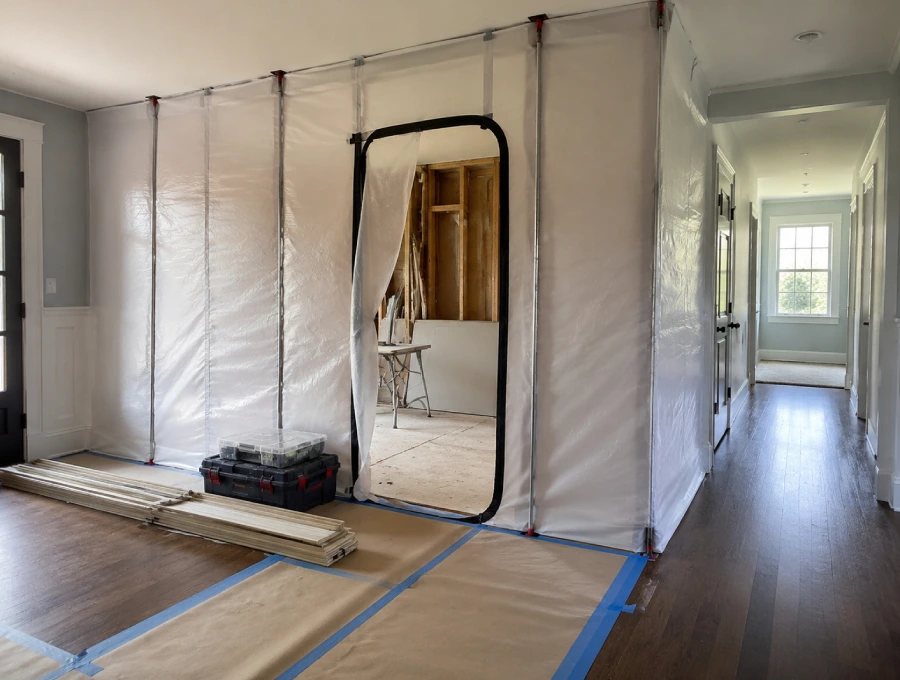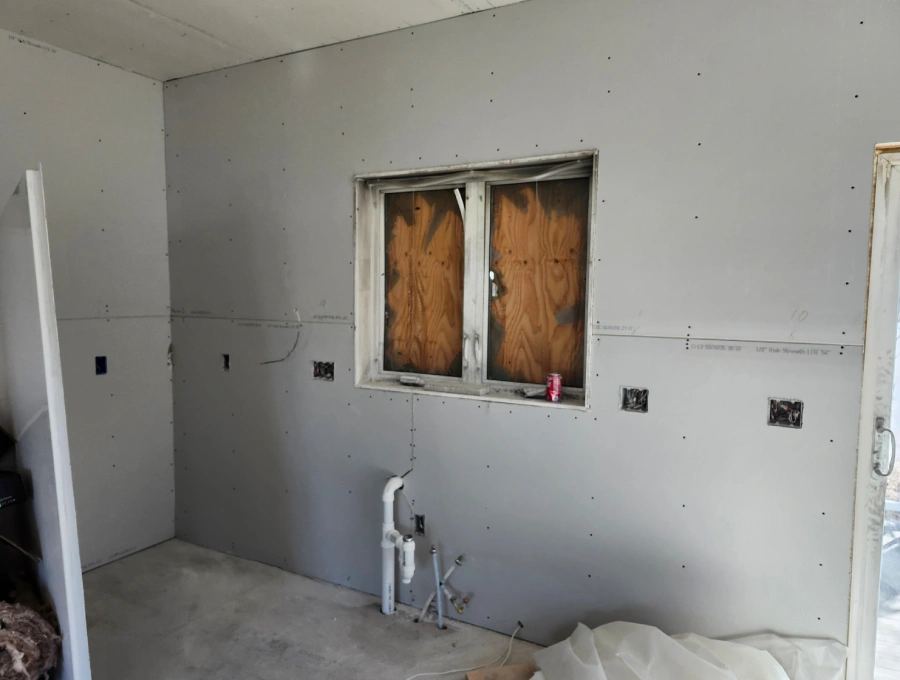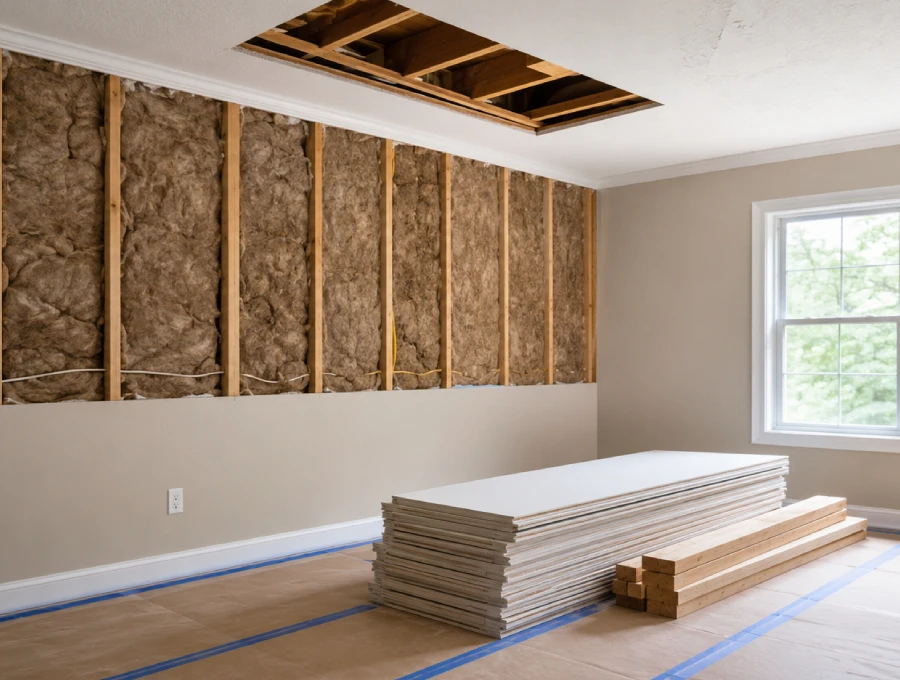
Cleanup and mitigation are only one stage of getting a property back to normal. Once affected materials have been removed and the space has been dried or stabilized, damaged building components may still need repair or reconstruction before the property can be used again.
This guide walks through what may still need attention after cleanup, and how a property owner can start to understand the next stage of the process.
What Cleanup and Mitigation May Leave Behind
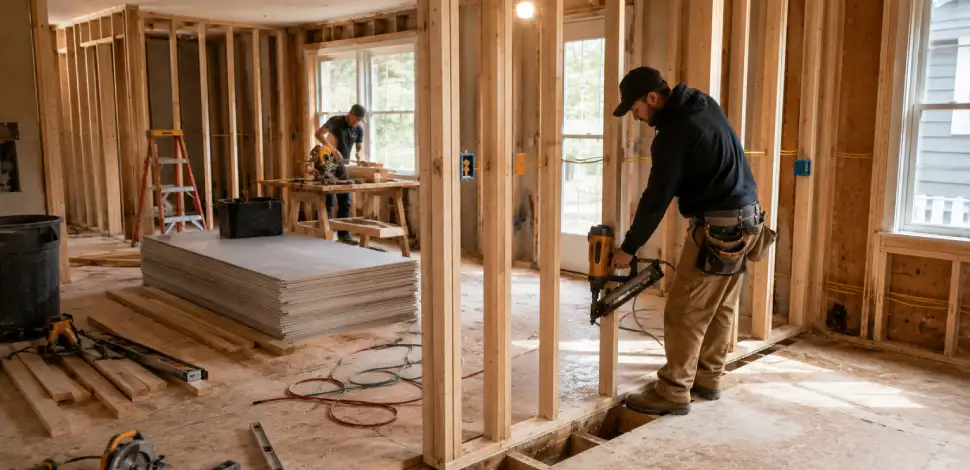
Cleanup and mitigation address water removal, drying, and the removal of damaged materials. That work often leaves the property in this condition:
- Open wall or ceiling areas
- Removed drywall and insulation
- Exposed framing
- Damaged flooring or subflooring
- Incomplete rooms
- Building components that still need to be rebuilt
The visible water is gone at this point, but the property is not finished. It is simply ready for the next stage.
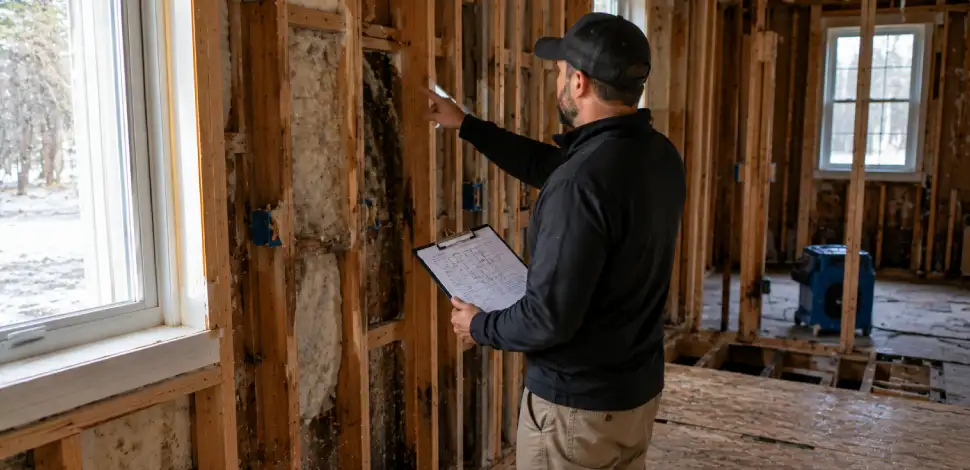
When Reconstruction May Be Needed After Water Damage
Reconstruction may be needed when the condition of the property goes beyond what cleanup alone can address. The correct scope depends on documented damage, not on how the space looks at a glance.
Reconstruction may be worth discussing when:
- Materials were removed during mitigation
- Construction components remain damaged
- Framing or subflooring is exposed
- A room cannot return to normal use without rebuilding
- The documented scope includes replacement of affected components
A contractor may recommend reconstruction after reviewing these conditions directly. A complete rebuild is not automatic just because cleanup took place.
Conditions a Reconstruction Contractor Reviews
Before recommending next steps, a reconstruction contractor may review:
- Areas that were opened during cleanup
- Removed or damaged building materials
- The condition of remaining construction components
- Access limitations that could affect the work
- Material compatibility with the rest of the property
- Code-related construction requirements that apply to the work
- Documented repair or insurance scope, where one exists
Octagon Construction & Energy does not provide engineering approval, code approval, insurance claim negotiation, or public-adjusting services. Those pieces, when needed, come from the appropriate licensed professional or insurer.
How Documented Scope and Site Conditions Affect Rebuilding
A documented scope gives the project an initial framework. It outlines what has been identified so far and what is expected to be rebuilt.
Actual site conditions can still affect how the work is planned. Conditions that were not visible when the scope was written may become apparent after construction begins. Insurance coverage depends on the policy, cause of loss, documented scope, and the insurer’s decision. The reconstruction plan may also need to reflect the conditions confirmed on site.
When to Contact a Reconstruction Contractor
It may be a good time to reach out to a reconstruction contractor when:
- Cleanup and drying are complete
- Damaged materials have already been removed
- Building components remain open or incomplete
- The property is ready to move from mitigation into rebuilding
- You need help understanding what the reconstruction stage may involve
If your property has reached this point, water damage reconstruction services from Octagon Construction & Energy can help you understand the remaining scope and plan the next steps.
Discuss Your Reconstruction Project
If cleanup is complete and your property still needs rebuilding, Octagon Construction & Energy can review the remaining scope and discuss next steps.
Frequently Asked Questions
- What happens after water damage cleanup is complete?
The visible water and damaged materials are gone, but the property may still have open walls, exposed framing, or incomplete rooms that need to be rebuilt before normal use can resume.
- Does water damage always require reconstruction?
No. Reconstruction may be needed when materials were removed or building components remain damaged or incomplete after cleanup. The appropriate scope depends on the documented conditions.
- When should a reconstruction contractor become involved?
Once cleanup and drying are complete and the property still has open or incomplete building components, a reconstruction contractor can review the site and outline what may need to be rebuilt.
- What building materials may need to be rebuilt?
Depending on what was removed during mitigation, this can include drywall, insulation, framing, flooring, and subflooring.
- Can reconstruction begin before the property is fully dried?
Reconstruction generally begins once drying and stabilization are complete. Starting rebuilding work too early can trap moisture inside new materials.