- (207) 310-4163
- office@octagonconstructionandenergy.com
- 12 Roosevelt Trail Unit 4, Windham, Maine 04062

Water Damage Reconstruction in Maine & New Hampshire
Octagon Construction & Energy rebuilds homes in Maine and New Hampshire after water damage once cleanup and drying are complete — drywall, framing, insulation, subfloor, flooring, trim and finishes.
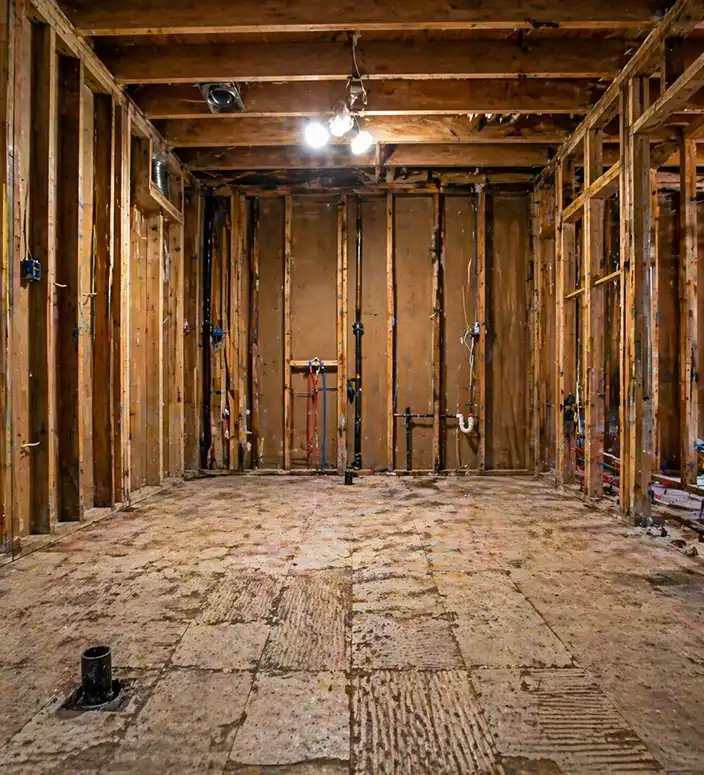
Even when emergency cleanup, drying, or mitigation is complete, important building components such as drywall, framing, insulation, flooring, trim, and interior finishes may still need to be rebuilt. Octagon Construction & Energy begins once the property is ready for reconstruction, with a focus on visible rebuild needs, construction scope, and interior or structural reconstruction after water damage.
Talk to a Reconstruction Specialist: (207) 310-4163
What Usually Happens After Initial Mitigation
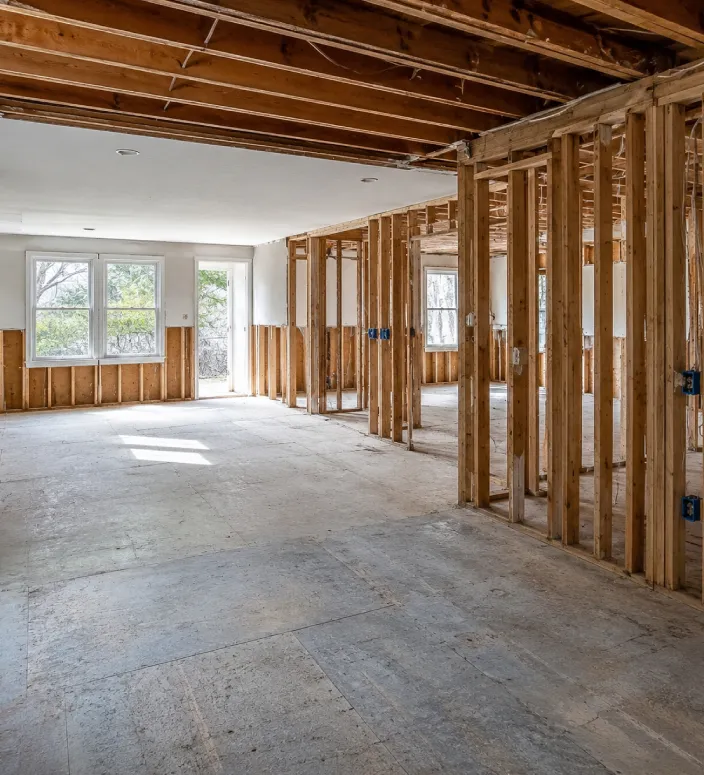
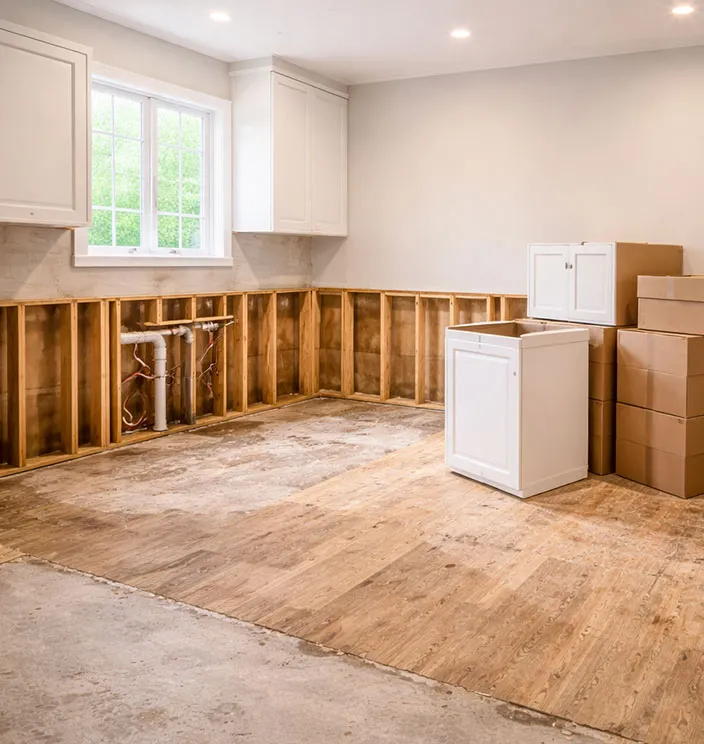
In some projects, mitigation or demolition may leave walls, ceilings, flooring, or framing exposed before reconstruction begins. The rebuild begins after the cleanup and drying phase is complete. By this stage, the property may already be dried, opened up, gutted, or prepared for rebuilding.
- Emergency response and mitigation completed by others
- Review of remaining damaged materials that affect the reconstruction scope
- Review of visible water-affected building components
- Review of exposed framing, flooring, ceilings, insulation, and wall systems
- Confirmation that the property is ready to move from cleanup into rebuild
- Reconstruction planning based on visible site conditions and approved scope when applicable
Even smaller water events can reveal broader reconstruction needs once affected areas are opened and reviewed. Proper reconstruction helps return the home to a functional, finished, and livable condition. For a step-by-step look at this stage, read what happens after water damage cleanup.
When Water Damage Becomes a Reconstruction Project
- Drywall has been cut out or removed
- Flooring or subfloor materials have been damaged
- Ceilings, trim, insulation, or lower wall sections need rebuilding
- Finished basement areas have been opened up after a water loss
- Framing or structural areas are exposed
- Rooms are incomplete after mitigation or demolition
- The property cannot return to normal use without construction work
This is the phase Octagon Construction & Energy handles: the rebuild, after the property is stabilized and ready.
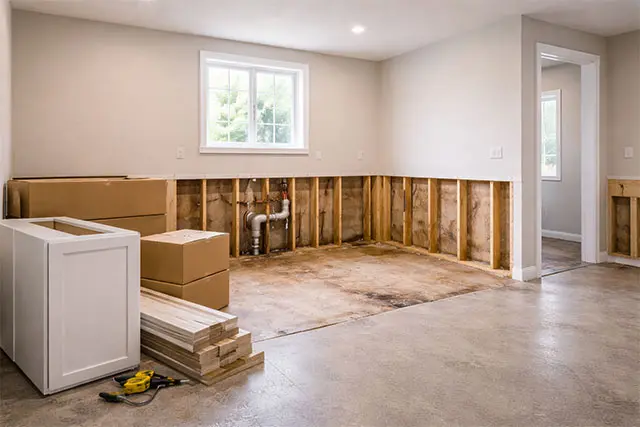
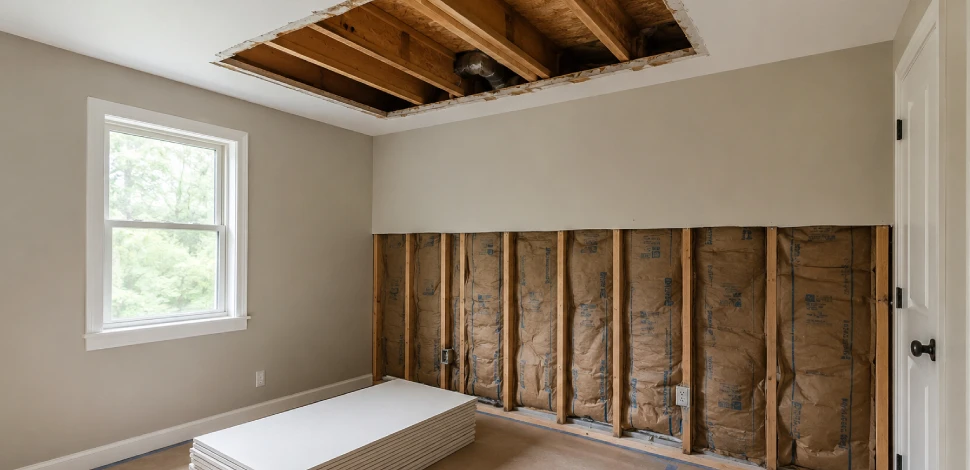
Rebuilding a Water-Damaged Ceiling
A water stain spreading across the ceiling usually means water has been sitting above it — from an upstairs bathroom, a leaking pipe, an ice dam or a roof leak. Once the area has been dried and the leak source has been fixed, Octagon Construction & Energy repairs or replaces the damaged ceiling so the room is finished and usable again.
Ceiling repair after water damage may include:
- Cutting out and replacing stained, sagging or softened ceiling drywall
- Replacing wet insulation above the ceiling
- Matching ceiling texture and repainting
- Reinstalling trim and crown molding
- Rebuilding the ceiling below an upstairs bathroom or kitchen
If the ceiling is still wet, it needs to be dried first. Our work starts once drying is done.
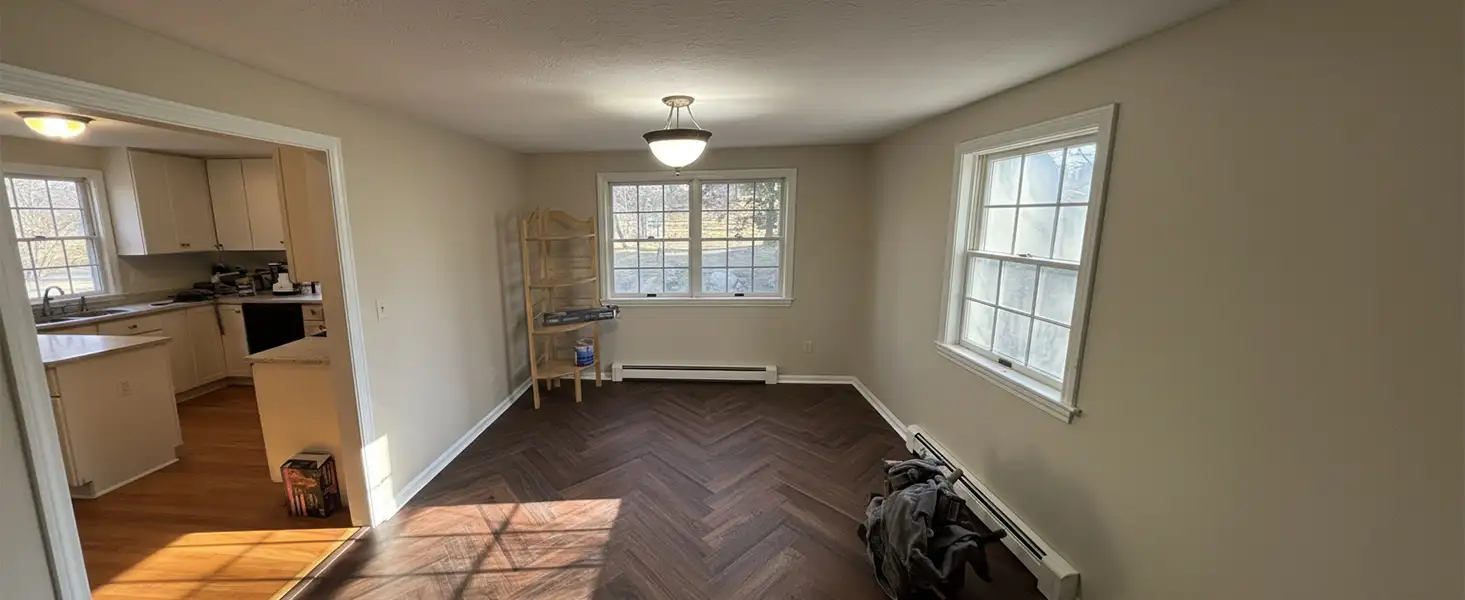
Rebuilding a Finished Basement After Water Damage
Finished basements take the worst of it in Maine and New Hampshire — sump pump failures, water heater leaks, burst pipes and spring snowmelt. After the basement has been dried and the damaged materials removed, we rebuild it.
Rebuilding a basement after water damage may include:
- Lower wall sections and full drywall walls
- Wall insulation and vapor barrier
- Flooring and subfloor
- Basement ceilings
- Trim, doors and finish carpentry
See a Windham basement rebuild after a water heater leak and a Conway basement rebuild after a burst pipe. For what happens before the rebuild starts, read basement renovation after flooding.
Pipe Burst and Water Loss Reconstruction
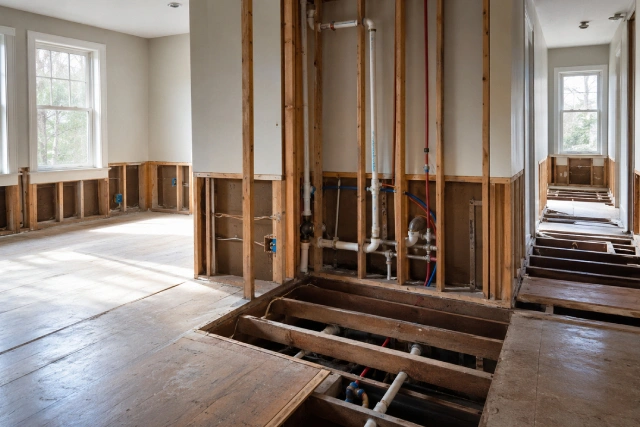
A burst pipe, water heater leak or appliance failure can soak more than the surface. Once the damaged areas are opened, the repair work may involve rebuilding walls, ceilings, flooring systems, trim, insulation and interior finishes.
Octagon Construction & Energy reviews what the burst pipe or water loss left behind and rebuilds the affected rooms once the damaged materials have been removed and the space is dry.
Common Reconstruction Areas
- Interior walls and ceilings
- Flooring systems and subfloor structures
- Trim and finish carpentry elements
- Insulation and lower wall sections
- Structural framing components when exposed or affected
- Finished basements and living spaces
- Kitchen, bathroom, and utility areas impacted by water loss
Our role is focused on reviewing construction-related rebuild needs, preparing reconstruction estimates when appropriate, and completing the reconstruction work once the property is ready for rebuild.
Reconstruction After a Gutted or Opened-Up Home
- Rebuilding opened walls and ceilings
- Replacing damaged flooring and subfloor areas
- Rebuilding or replacing trim, finishes, and interior details
- Rebuilding affected basement or living areas
- Addressing exposed structural or framing components based on visible conditions
- Completing approved construction work so the affected areas can be finished properly
For broader rebuild needs beyond water damage, we also provide structural reconstruction for homes with exposed or damaged building components.
Our Water Damage Reconstruction Process
 Mitigation CompletedWe begin after mitigation is complete and the structure is ready for rebuild.
- Visible Condition ReviewReview visible water-affected building components
- Scope DefinitionDefine the reconstruction work required based on actual conditions
- Insurance CoordinationAlign reconstruction work with the approved scope
- Reconstruction ExecutionRebuild affected areas according to the defined reconstruction scope
Each step is tied to what was actually damaged and what the approved scope covers.
When to Start Reconstruction After Water Damage
Reconstruction should begin as soon as mitigation is complete.
You should contact a reconstruction contractor when:
- Structural components are exposed
- Walls, flooring, or framing have been removed
- The home is not fully functional
Starting the rebuild once drying is confirmed keeps the home from sitting open longer than it needs to.
Insurance-Related Water Damage Reconstruction
Some water damage reconstruction projects involve insurance claims. If your property has been opened up, gutted, or prepared after a pipe break or water loss, Octagon Construction & Energy can review the visible rebuild needs and prepare construction-related scope information for carrier review.
Octagon Construction & Energy is not a public adjuster and does not guarantee insurance approval. Actual reconstruction work should follow the approved insurance scope when a claim is involved. For projects involving an approved claim scope, we can also support insurance reconstruction after water damage.
Water Damage in Maine & New Hampshire Homes
Homes in Maine and New Hampshire are particularly vulnerable to water damage due to:
These conditions often cause damage within subfloors, framing, and interior structures that becomes visible after mitigation.
Reconstruction in this region requires experience with seasonal damage patterns unique to Maine and New Hampshire homes.
Built for Reconstruction After Water Damage
Reconstruction is not just rebuilding.
- Over 20 years of combined leadership experience
- 1-year workmanship warranty
Our work rebuilds what water damage took out, to the approved scope.
Real Water Damage Reconstruction Projects
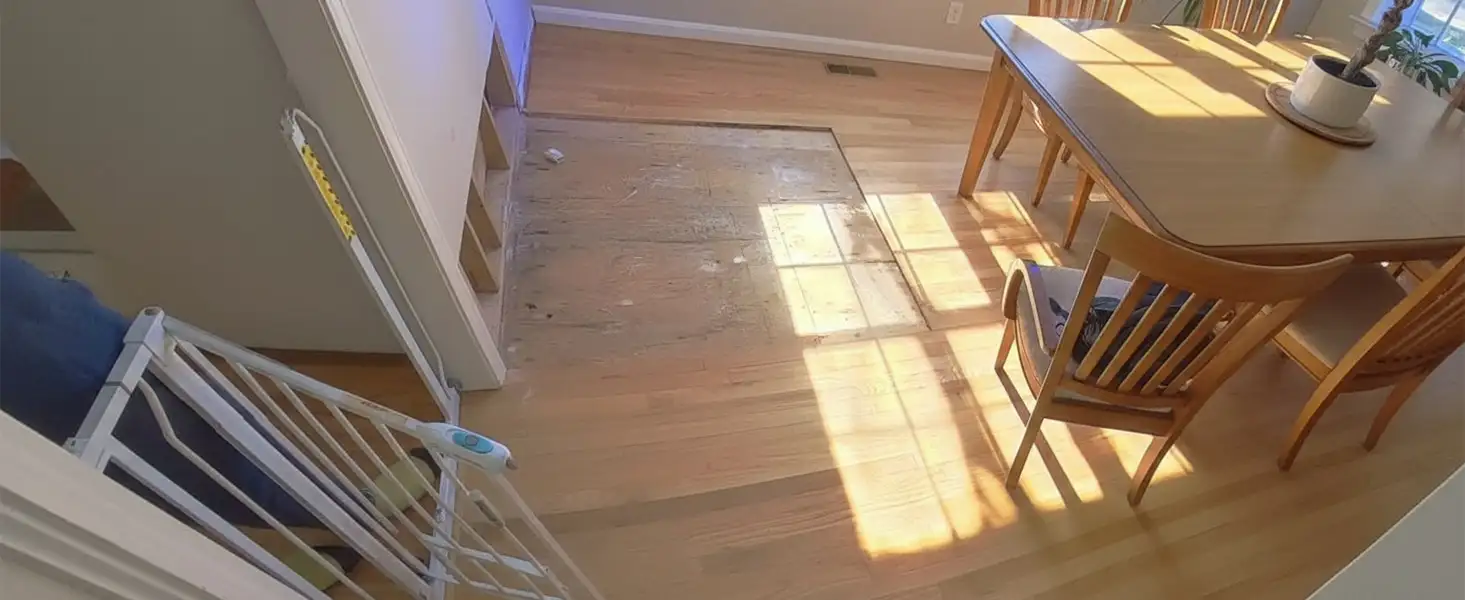
Windham Basement Water Damage Reconstruction
After a water heater leak and mitigation work, we rebuilt the affected basement areas, including drywall, trim, flooring, and finishes.
Need Help With a Water Damage Reconstruction Project?
Reconstruction specialists in Maine & New Hampshire.
Tell us what happened
Send us a few details and we will call you back to talk through the rebuild.
Prefer to talk now? Call (207) 310-4163
Frequently Asked Questions
What is water damage reconstruction?
When does water damage become a reconstruction project?
Does Octagon Construction & Energy handle water extraction or drying?
Octagon Construction & Energy handles the rebuild. Extraction, drying and cleanup are a separate trade, and our work starts once that phase is finished and the property is ready for reconstruction.
Can you help after a pipe burst?
Yes. If a pipe burst has damaged rooms, flooring, walls, ceilings, or other building materials, we can review the rebuild needs once the property is stabilized and ready for reconstruction.
Can a water-damaged ceiling be repaired, or does it need to be replaced?
It depends on how far the water got. A small, dried stain on otherwise intact drywall can often be sealed and repainted. Drywall that has sagged, softened or been cut out during drying is replaced, along with any wet insulation above it. We review the ceiling once drying is done and scope the repair to match what we find.
Does Octagon Construction & Energy rebuild finished basements after water damage?
Yes. We rebuild finished basements after flooding, sump pump failures, water heater leaks and burst pipes — walls, insulation, flooring, ceilings and trim — once the space has been dried.
Who repairs water damage after the drying company leaves?
A reconstruction contractor. Once the drying company has finished, Octagon Construction & Energy rebuilds what was removed — drywall, insulation, subfloor, flooring, trim and finishes — so the rooms can be used again.