Fully Insured | Leadership Team with 20+ Years of Combined Experience | 1-Year Workmanship Warranty
Fixing the source of a roof leak stops additional water from entering the home, but it does not automatically complete the interior repairs.
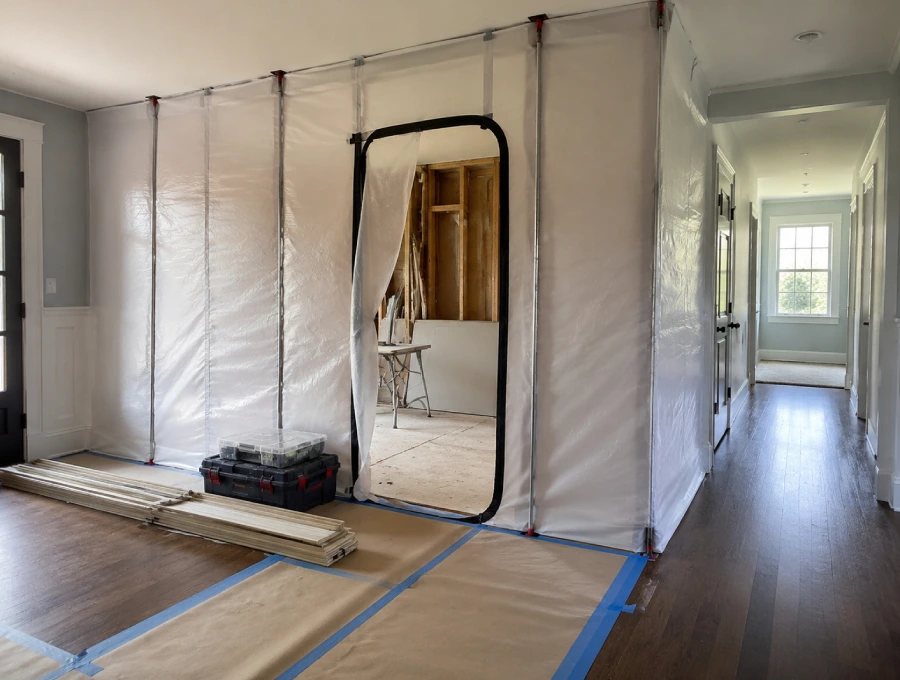
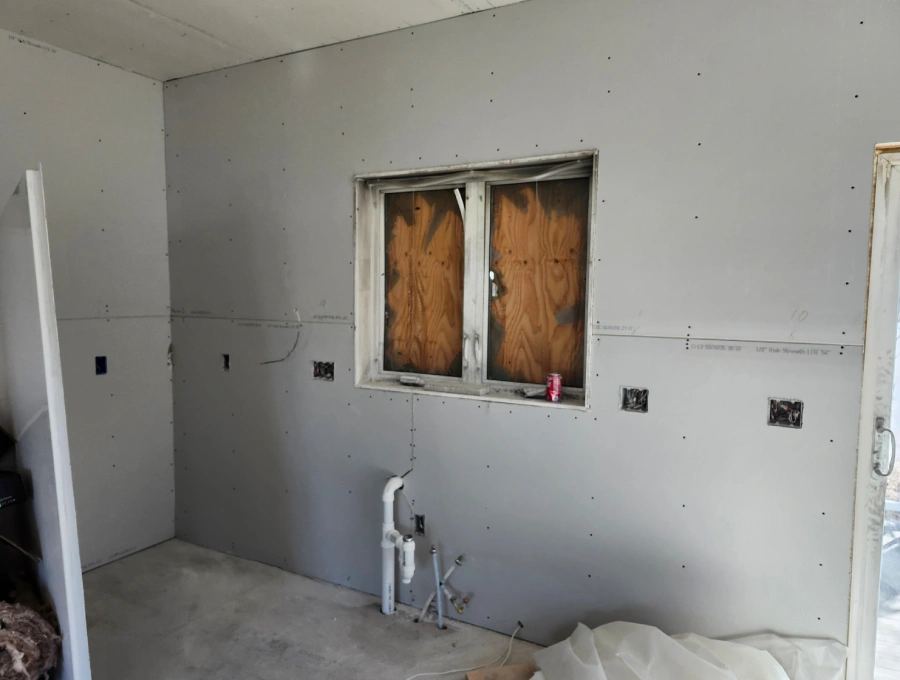
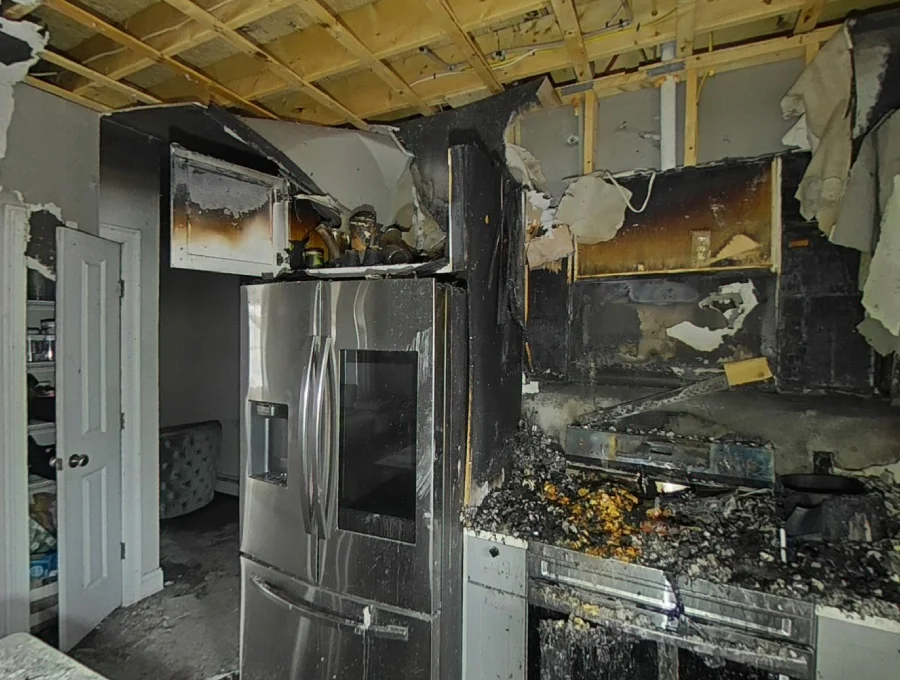
Ceiling drywall may have been opened, insulation may have been removed, wall finishes may be incomplete, and flooring or trim may still show damage. In some cases, exposed framing or subflooring must also be addressed before the affected rooms can be returned to normal use.
Octagon Construction & Energy focuses on the reconstruction phase after the leak source has been repaired and the affected areas are ready for rebuilding. As a reconstruction contractor serving Maine and New Hampshire, Octagon Construction & Energy rebuilds damaged interior and structural components based on the documented conditions of the property.
Quick Answer
Interior reconstruction after a roof leak may include rebuilding ceiling drywall, replacing insulation, repairing opened wall sections, replacing damaged flooring or subfloor materials, reinstalling trim, and addressing framing exposed during the interior rebuild.
The exact work depends on which materials were removed, which components cannot remain in place, and what is required to return the affected interior areas to a safe, complete, and usable condition.
What Happens After the Roof Leak Is Fixed?
The first priority is addressing the source of the leak. This work may be completed by a roofer or another contractor responsible for the roof system and water-entry point.
Once the leak source has been confirmed as repaired, the project shifts from stopping water intrusion to rebuilding the affected interior.
At that stage, a reconstruction contractor reviews the areas left open or incomplete. The contractor may examine:
- Ceiling sections opened during earlier work
- Insulation removed from ceiling or wall cavities
- Drywall and interior finishes that require replacement
- Flooring or subfloor materials affected below the leak
- Trim, molding, and finish carpentry removed from the affected area
- Framing or sheathing exposed during access to damaged materials
This handoff matters because repairing the roof and rebuilding the interior are separate scopes. Roof work addresses how water entered. Interior reconstruction addresses what must be rebuilt inside the home after that source has been corrected.
Which Interior Materials May Need Rebuilding?
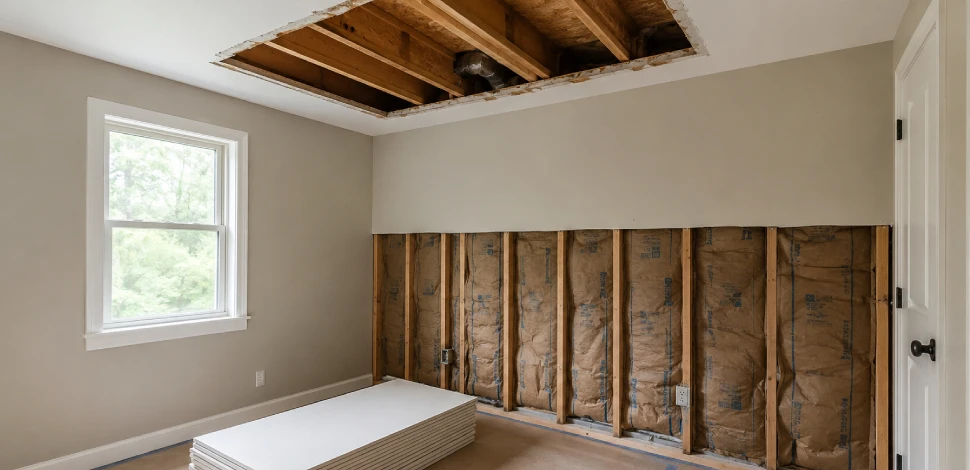
Not every roof leak results in the same interior reconstruction scope. The location of the leak, how far the water traveled, and which materials were removed will determine what must be rebuilt.
Ceiling Drywall
Ceiling drywall is often one of the first interior materials affected by a roof leak.
Reconstruction may involve:
- Replacing opened or removed ceiling sections
- Installing new drywall
- Finishing seams and transitions
- Matching the surrounding ceiling texture where practical
- Priming and painting the repaired area
The reconstruction area may be larger than the visible damage because additional materials may need to be removed to check the insulation, framing, or other hidden areas.
Insulation
Insulation above a ceiling or inside an upper wall may require replacement when it has been removed or can no longer remain in place.
The reconstruction scope may include:
- Replacing missing insulation
- Reinstalling insulation in opened ceiling or wall cavities
- Confirming the cavity is ready before it is closed
- Coordinating insulation replacement with drywall and finish work
The type and amount of insulation required depend on the exposed area and applicable construction requirements.
Interior Walls and Finishes
Water can move from a ceiling into adjoining wall sections. When wall materials have been opened or removed, reconstruction may include:
- Replacing sections of wall drywall
- Rebuilding corner and ceiling transitions
- Applying joint compound and finishing
- Priming and painting affected wall areas
- Reinstalling baseboards or other finish materials
The goal is to complete the affected interior area rather than leave visible openings or unfinished transitions after the roof work is complete.
Flooring and Subflooring
Water that travels through a ceiling or wall can reach the floor below.
Depending on the exposed conditions, reconstruction may involve:
- Replacing affected finished flooring
- Repairing or replacing subfloor sections
- Reinstalling transitions between affected and unaffected flooring
- Replacing baseboards or shoe molding
- Completing finish work around the rebuilt floor area
Broader rebuilding after the water-related material removal is covered separately under water damage reconstruction.
Trim and Finish Carpentry
Interior trim may be removed to access wall cavities, flooring edges, or damaged materials.
Reconstruction may include:
- Reinstalling or replacing baseboards
- Replacing window or door trim in the affected area
- Rebuilding ceiling molding
- Completing caulking, filling, and painting
- Matching nearby finish details where practical
These finishing components are important because the room may remain visibly incomplete even after the main drywall or flooring work is finished.
Exposed Framing
In some projects, opening a ceiling or wall reveals framing that must be reviewed before the area is closed.
When exposed framing, roof sheathing, subflooring, or other building components require rebuilding, the project may involve structural reconstruction.
The reconstruction scope should be based on the documented condition of the exposed components rather than assumptions made before the interior materials were opened.
What Should Be Completed Before Reconstruction Begins?
Interior reconstruction should begin after the affected area is ready for rebuilding.
Before work starts, the following items should be confirmed:
- The source of the roof leak has been repaired
- Any required drying or stabilization has been completed
- Damaged or removed areas are accessible
- The affected ceiling, wall, or flooring areas are ready for construction
- Relevant project documentation is available
- The insurance scope is available when the work is connected to a covered claim
These steps help prevent the interior from being closed before the underlying leak or remaining project conditions have been addressed.
How Is the Interior Reconstruction Scope Determined?
The reconstruction scope is based on the actual exposed conditions of the interior.
A contractor may review:
- Which ceiling or wall materials were removed
- How much insulation is missing
- Whether flooring or subflooring requires replacement
- Which trim and finish materials must be reinstalled
- Whether exposed framing requires rebuilding
- How the new work will transition into the remaining interior finishes
- Whether the documented insurance scope matches the visible construction needs
The final scope should be based on documented construction conditions, approved project documentation when applicable, and the materials that require rebuilding.
This is different from broadly assessing storm damage. The interior reconstruction scope focuses on the specific areas left open, removed, or unfinished after the roof leak has been corrected.
What If the Roof Leak Was Part of Broader Storm Damage?
Some roof leaks occur as part of a larger event involving wind, roof-system damage, exterior impact, or structural concerns.
Those broader situations are addressed separately in Octagon Construction & Energy’s guide to storm damage reconstruction.
This article focuses specifically on the interior rebuilding phase after the leak source has already been repaired.
Insurance and Interior Reconstruction
When interior rebuilding is connected to a covered claim, the work should follow the documented and approved scope. Octagon Construction & Energy does not determine coverage or negotiate claims, but construction conditions or scope information may be documented for carrier review when appropriate. Learn more about insurance reconstruction.
Rebuilding the Interior After Roof Repair
After the leak source is repaired, the remaining work may involve rebuilding ceiling drywall, insulation, wall finishes, flooring, trim, or exposed framing. A documented reconstruction scope identifies what was removed, what must be replaced, and how the affected interior will be completed.
Need Interior Reconstruction After a Roof Leak?
If your roof leak has been repaired but the interior remains open, damaged, or unfinished, Octagon Construction & Energy can review the remaining reconstruction needs.
To discuss the rebuilding scope for your property, contact Octagon Construction & Energy or call (207) 310-4163.
Frequently Asked Questions
1. What gets rebuilt inside a home after a roof leak?
Interior reconstruction may include ceiling drywall, insulation, wall sections, flooring, subflooring, trim, paint, and framing exposed during the rebuilding process.
2. Can interior reconstruction begin as soon as the roof is repaired?
Reconstruction may begin after the leak source has been confirmed as repaired, any required drying or stabilization has been completed, and the affected areas are ready for rebuilding.
3. Does ceiling drywall always need to be replaced after a roof leak?
Not always. Replacement depends on the condition of the drywall, how much material was removed, and whether the existing ceiling sections can remain in place.
4. Can insulation be replaced during interior reconstruction?
Yes. Insulation removed from opened ceiling or wall cavities may be replaced as part of the reconstruction scope before the area is closed.
5. What determines the scope of interior reconstruction?
The scope depends on the actual exposed conditions, the materials removed, the areas left unfinished, and the work required to complete the affected interior.
6. Can insurance be involved in rebuilding the interior after a roof leak?
Insurance may apply when the damage results from a covered event. Coverage depends on the policy, carrier review, cause of loss, and approved scope.