Local storm context
Every year, homes across Maine and New Hampshire experience storm conditions that go far beyond visible exterior damage. Nor’easters bring wind-driven rain that can force moisture beneath roofing systems and siding assemblies. Coastal wind exposure can loosen exterior materials and create entry points for water intrusion. Ice storms often damage roof edges, gutters, siding, and attached structures, while heavy snow loads can stress older framing systems.
In New Hampshire’s mountain regions, freeze-thaw cycles and wind-driven precipitation can create hidden structural issues that are not immediately visible after a storm passes. In many cases, the visible damage is only the surface layer of a deeper structural problem involving insulation, framing, ceilings, and interior systems.
Storm damage may require reconstruction when structural or hidden damage is present, or when emergency response, cleanup, and stabilization are complete and the rebuild scope must be coordinated with a reconstruction contractor.
When repair stops being enough
Storm damage may move from repair to reconstruction when multiple building systems are affected and the rebuild requires coordinated reconstruction work.
This may include:
- Multiple systems affected across the roof, walls, flooring, and insulation
- Structural members affected, including rafters, studs, and subflooring
- Moisture spread behind finished surfaces such as drywall or flooring
- Insurance scope expanding beyond minor exterior repairs
- Code or permit requirements triggered due to structural work
At this stage, repair work alone may not address the full scope of damage because affected areas can extend beyond exterior components into interconnected structural systems.
Storm damage that hides in plain sight
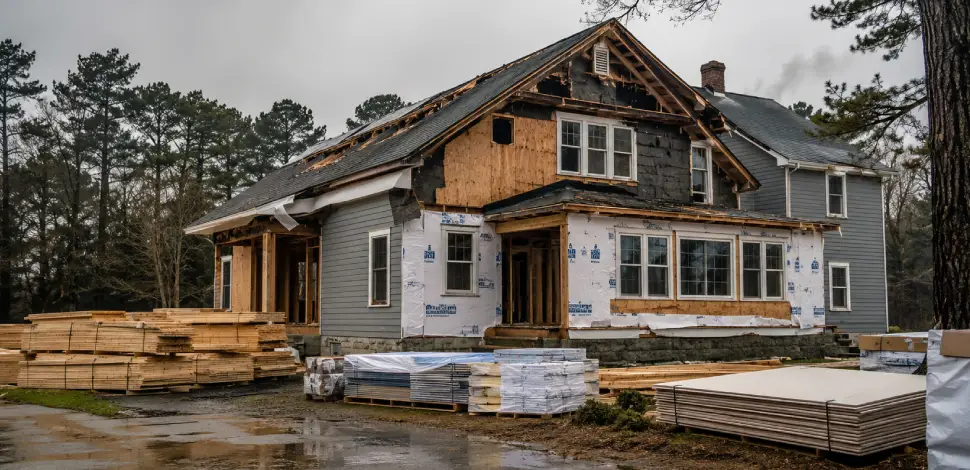
Some storm damage remains hidden until reconstruction begins and materials are opened.
Common hidden conditions may include:
- Compromised roof sheathing under intact shingles
- Affected insulation behind undamaged drywall
- Minor foundation cracks caused by soil saturation
- Framing connections affected by prolonged wind stress
These conditions may remain undetected during initial inspection but may require reconstruction once exposed and included within the approved scope of work.
Roof damage and the rebuild threshold
Roof systems are often the first point of storm impact, but not all roof damage requires reconstruction.
Repair-level roof damage may include:
- Isolated missing shingles
- Single-section flashing failure
- Minor gutter replacement
Reconstruction-level roof damage may include:
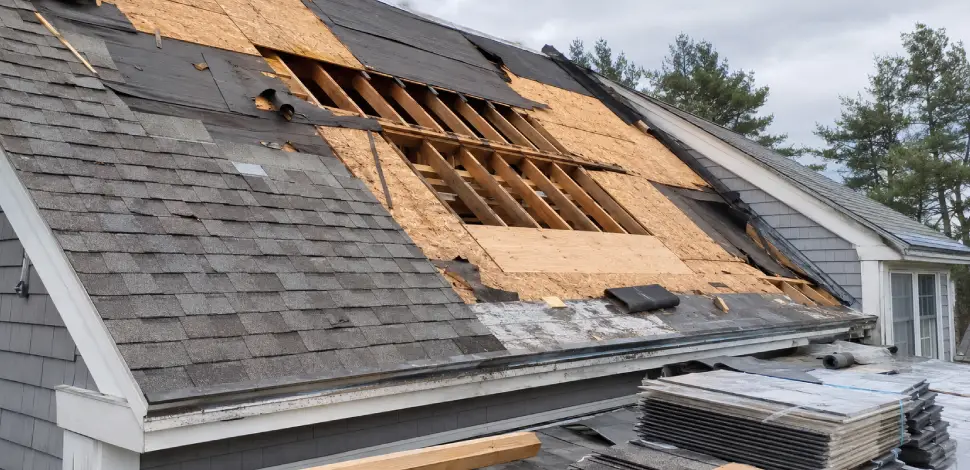
- Multi-area roof sheathing damage
- Structural rafter or truss concerns
- Water intrusion affecting ceilings, walls, or insulation
- Repeated leak failures across multiple sections
- Damage extending into interior systems
When storm-related damage affects connected structural or interior systems, reconstruction may be required based on documented conditions.
A related reconstruction scope example
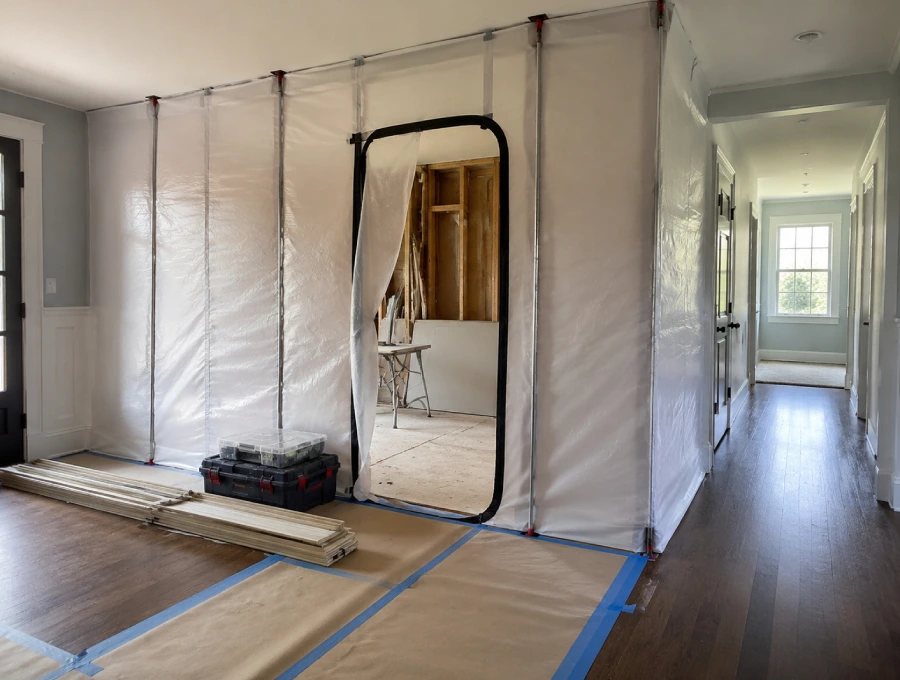
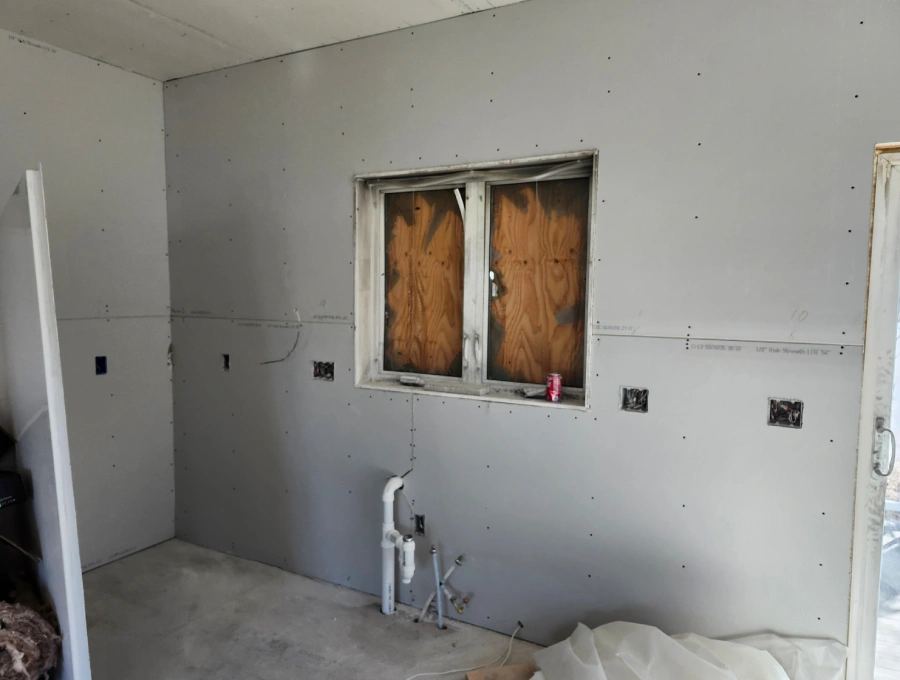
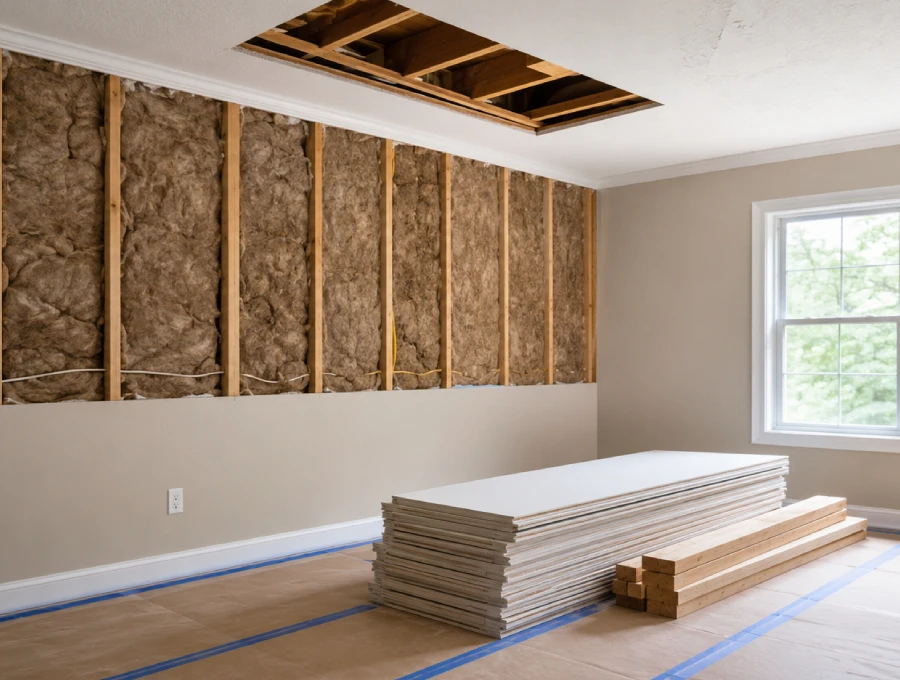
While not a storm-loss project, a recent New Hampshire water intrusion reconstruction demonstrates how quickly damage can move beyond surface repair.
The scope included insulation replacement, drywall reconstruction, flooring replacement, finish carpentry, and cabinetry installation before the space could return to usable condition.
This example highlights how interconnected building systems respond to water exposure and why reconstruction planning must account for hidden damage, not just visible exterior conditions.
Insurance and storm damage reconstruction
Insurance may be involved when sudden storm-related events cause structural or interior damage.
In these situations:
- Insurance may evaluate wind, water, or structural storm impact
- An approved reconstruction scope may be issued by the carrier
- Reconstruction follows the documented scope of work
- Construction-related findings identified during rebuilding may be documented for carrier review
Octagon Construction & Energy begins reconstruction after emergency response, cleanup, and stabilization are complete. We work from the approved reconstruction scope and focus on rebuilding affected structural and interior systems based on documented conditions.
Maine and New Hampshire storm considerations
Storm damage reconstruction in Maine and New Hampshire is influenced by regional environmental conditions, including:
- Older residential structures with mixed framing systems
- Coastal wind exposure increasing roof and exterior stress
- Freeze-thaw cycles affecting hidden structural concerns
- Seasonal properties where damage may go undetected
- Municipal permitting differences across towns and cities
These factors influence reconstruction timing, scope planning, and material coordination.
Related reconstruction services
Storm-related damage can involve different areas of a property depending on documented conditions.
Learn more about related services:
Reconstruction services:
Reconstruction services provide an overview of broader rebuilding work after stabilization.
Structural reconstruction:
Structural reconstruction may be relevant when framing, roof systems, or other structural components require rebuilding.
Water damage reconstruction:
Water damage reconstruction may be relevant when storm-related moisture affects interior or structural systems.
For property owners in Maine and New Hampshire, Octagon Construction & Energy provides reconstruction services based on approved project scopes and documented conditions.
Frequently Asked Questions
1. When does storm damage require reconstruction?
Storm damage may require reconstruction when structural systems, insulation, or interior finishes are affected beyond repair-level damage and rebuilding is required based on documented conditions.
2. Is storm damage reconstruction different from roof repair?
Yes. Roof repair addresses exterior issues, while reconstruction rebuilds affected structural and interior systems.
3. Can storm damage affect structural framing?
Yes. Wind and water intrusion may affect framing, subflooring, and roof structures depending on the severity and duration of the damage.
4. Does insurance cover storm damage reconstruction?
Insurance coverage depends on policy terms, the cause of damage, and whether the damage is documented and included within an approved reconstruction scope.
5. How long does storm damage reconstruction take?
Project timelines vary depending on scope, materials, permitting requirements, and local conditions.
6. What should homeowners check after a storm?
After a storm it is worth having roofs, ceilings, walls, insulation and flooring looked at, since storm damage often extends past what is visible.
Discuss Your Storm Damage Reconstruction Project
If storm damage has affected roofing, walls, insulation, flooring, or structural components, Octagon Construction & Energy can help rebuild affected areas after emergency response, cleanup, and stabilization are complete.