Quick Answer
Why Bathroom Water Damage Is Harder to See
Most bathroom water damage does not start with a flood. It starts with a slow leak: a failed wax ring under the toilet, a cracked shower pan, a loose supply line behind the vanity, or grout that stopped keeping water out years ago. By the time a stain shows on the ceiling below or the floor feels soft, water has usually been working its way through several layers.
A bathroom is built in layers. Tile sits on backer board, backer board sits on a waterproofing layer, and all of it sits on the subfloor and framing. When one layer gets wet, the layers around it usually need to come out too. That is why a bathroom often looks worse once the drying crew has opened it up than it did on the day of the leak.
Everything in this article starts after two things are done: the plumber has fixed the source of the leak, and the drying and cleanup company has finished its work. What is left is a room that needs to be put back together. That is the work of water damage reconstruction.
What Usually Needs to Be Rebuilt in a Water-Damaged Bathroom
Every bathroom is different, and your insurance scope decides the final list. These are the areas that most often need rebuilding:
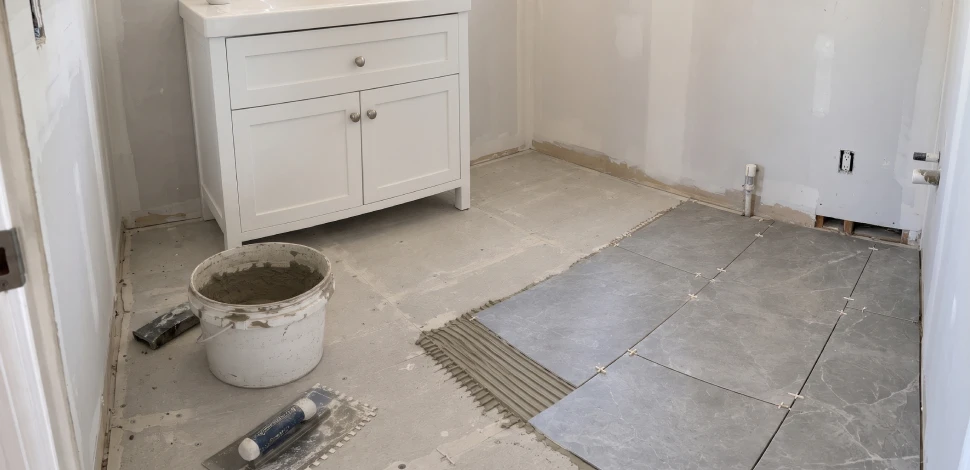
- Subfloor and underlayment. Plywood or OSB that stayed wet can swell, soften or come apart in layers. Damaged sections are cut out and replaced so the new floor has a flat, solid base.
- Floor tile or vinyl. Tile is rarely saved once the subfloor underneath it is replaced. Sheet vinyl and click-lock flooring usually come up with the damaged underlayment.
- Tile backer and waterproofing. Behind shower and tub tile, cement board and a waterproofing membrane are rebuilt together. This is the layer that keeps the next leak out of the walls.
- Tub or shower surround. Tile walls, acrylic surrounds and shower pans are replaced when the leak came from the shower itself or when the wall behind them was affected.
- Walls outside the shower. Drywall that was cut out during drying is replaced, taped and finished. Moisture-resistant board is typically used in bathrooms.
- Vanity and cabinets. Most vanity bases are particleboard, which swells when it gets wet and does not shrink back. A swollen vanity is normally replaced, along with the countertop if it cannot be reused.
- Toilet, sink and fixtures. Fixtures are removed so the floor and walls can be rebuilt, then reinstalled or replaced.
- Trim, doors and paint. Baseboard, door casing and the bottom of the door itself often take on water. Paint is finished to match once the walls are rebuilt.
When the Bathroom Is Upstairs
A second-floor bathroom leak rarely stays in the bathroom. Water follows the framing down and shows up in the ceiling, walls and sometimes the floor of the room below. That room becomes part of the same rebuild: ceiling drywall, insulation where it was removed, paint, and any finishes that were damaged.
It helps to treat both rooms as one project. Rebuilding the bathroom first and the room below later usually means two rounds of disruption and two rounds of finish work.
Matching Tile and Finishes
One of the most common questions in a bathroom rebuild is whether the new tile will match the old. In many homes, the original tile is no longer made. When that happens, a partial repair can leave a visible patch in the middle of the floor or wall.
How that is handled depends on your policy and on what your carrier reviews and approves. Some scopes cover replacing a full floor or wall so the finish is consistent. Others cover only the damaged area. Your reconstruction contractor can document the match problem with photos and product details so it can be included in the information your carrier reviews.
How a Bathroom Rebuild Fits Into an Insurance Claim
Most bathroom water damage is part of a homeowners insurance claim. The adjuster writes a scope of the damage, and the reconstruction contractor prepares a rebuild estimate based on what is found in the room. When the two do not line up, the differences are documented and submitted for carrier review.
That is a normal part of the process. Hidden damage behind tile and under floors is common in bathrooms, and it is often found only once the room is opened. If your contractor’s number is higher than the insurance estimate, our guide on why a contractor estimate can be higher than the insurance estimate explains what usually drives the gap. For the full sequence, see what happens after claim approval.
Making Changes While the Bathroom Is Open
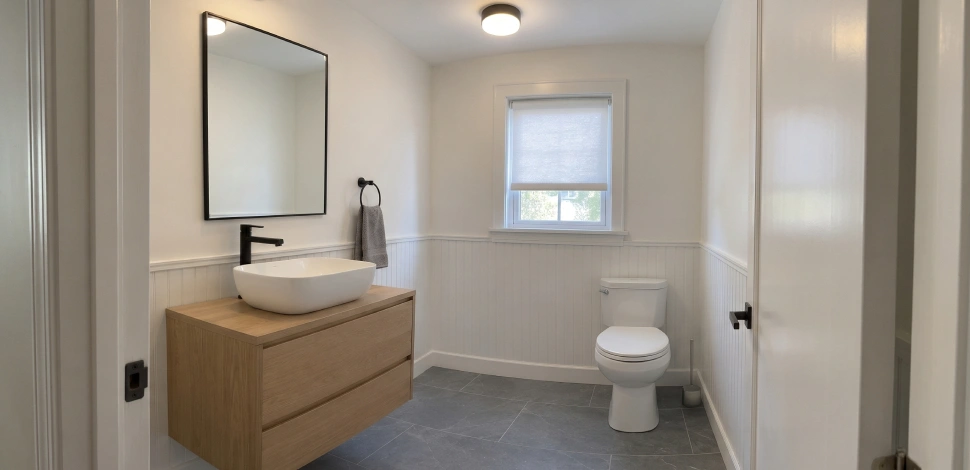
A bathroom stripped back to the studs is the easiest time to make changes. Many homeowners use the rebuild to swap a tub for a walk-in shower, move to a larger vanity or update the tile layout.
Changes beyond the approved insurance scope are priced separately from the insurance work, so you can see exactly what the claim covers and what you are adding. Octagon Construction & Energy can handle both in the same project.
Living in the House Without a Bathroom
If the damaged bathroom is the only one in the house, the rebuild has a bigger effect on daily life. Whether you can stay home depends on whether another bathroom is usable, whether the work area can be closed off, and what your policy says about additional living expenses. Our guide on whether you can live in your home during reconstruction covers the main factors.
Getting Ready for the Rebuild
The bathroom rebuild moves faster when these are in hand:
- Confirmation that the leak has been repaired
- Paperwork from the drying and cleanup company showing the room is dry
- Your claim number and the adjuster’s scope, if you have it
- Photos of the bathroom before and after the damage
- A rough idea of any changes you want to make while the room is open
Rebuild Your Bathroom With Octagon Construction & Energy
Octagon Construction & Energy rebuilds water-damaged bathrooms and the rooms around them across Maine and New Hampshire. We are fully insured, back our work with a one-year workmanship warranty, and bring over 20 years of combined leadership experience to every rebuild.
If the drying is done and your bathroom is waiting to be put back together, tell us what happened.
Frequently Asked Questions
1. Does a water-damaged bathroom subfloor always need to be replaced?
A bathroom subfloor is replaced when it has swollen, softened or started to come apart in layers. Sections that stayed sound and dried out properly can often stay in place. The decision is made once the flooring is up and the subfloor can be checked directly.
2. Can bathroom tile be replaced in only the damaged area?
Bathroom tile can be replaced in only the damaged area when matching tile is still available. When the original tile is discontinued, a full floor or wall replacement may be needed for a consistent finish, and whether that is covered depends on your policy and the carrier’s review.
3. Does homeowners insurance pay to rebuild a bathroom after water damage?
Coverage for a bathroom rebuild is set by your homeowners policy and the scope your carrier approves. Sudden leaks are commonly covered, while long-term leaks and wear can be treated differently. Your adjuster or agent can confirm what your policy includes.
4. Who rebuilds a bathroom after water damage cleanup?
A reconstruction contractor rebuilds a bathroom after water damage cleanup. The drying company removes wet materials and dries the room. The reconstruction contractor then rebuilds the subfloor, walls, shower, flooring, vanity and finishes.
5. Can I upgrade my bathroom during water damage reconstruction?
You can upgrade a bathroom during water damage reconstruction. Changes beyond the approved insurance scope, such as a walk-in shower or a new layout, are priced separately so the insurance work and the upgrades stay clearly divided.
6. What should I have ready before a bathroom rebuild starts?
Before a bathroom rebuild starts, have confirmation that the leak is fixed, the drying company’s paperwork, your claim number and adjuster’s scope, and photos of the room. Knowing which upgrades you want also helps the estimate come together faster.