A Guide for Maine & New Hampshire Homeowners
Your insurance estimate and your contractor’s reconstruction estimate can describe the same property loss and still arrive at different totals. That does not automatically mean either document is wrong. In many cases, the difference comes from the work included, the quantities used, the materials specified, or construction conditions that became visible after cleanup and demolition.
For a homeowner, the most important question is not simply, “Which number is higher?” It is, “Do both estimates describe the same rebuild?”
Quick Answer
If the contractor’s reconstruction estimate is higher than the insurance estimate, compare the documents line by line before work begins. Look for differences in affected rooms, measurements, material quantities, finishes, trade work, permits, and construction conditions discovered after mitigation. A reconstruction contractor can document what the property requires and provide construction-related information for carrier review when appropriate. The insurance carrier decides coverage and approval.
Octagon Construction & Energy does not negotiate insurance claims or act as a public adjuster. Our role is to review the reconstruction requirements, explain the proposed rebuild scope, document visible construction conditions, and complete approved reconstruction work.
Have an Estimate That Does Not Match the Rebuild?
Send us a few details about the property, the damage, and the stage of your insurance claim, and we’ll get back to you to talk through the rebuild.
Why the Two Estimates May Be Different
The two estimates are often prepared at different times, for different purposes, and from different information. The totals matter, but the scope behind them usually explains the gap.
1. The Two Scopes May Describe Different Work
The insurance estimate reflects the damage and repair work documented during the carrier’s review. The contractor’s estimate reflects the construction work observed and priced at the property.
When one document includes part of a room and the other includes the full affected assembly, the totals differ even when unit prices are similar.
2. Measurements and Quantities Can Differ
Measurement differences add up across drywall, insulation, flooring, paint, trim, and finishes. Compare the square footage, linear footage, room count, and material quantities—not only the final price.
3. Mitigation Can Reveal Additional Construction Conditions
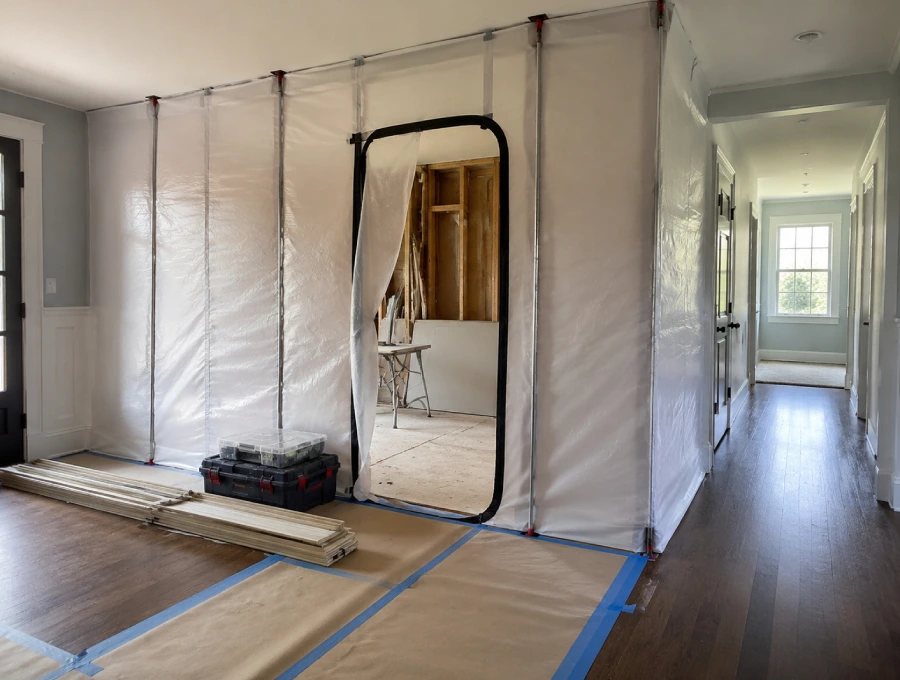
Cleanup and demolition can expose framing, subflooring, insulation, wall cavities, plumbing access, electrical openings, or other building components that were not fully visible during the first inspection.
Additional visible conditions need documentation and carrier review before related claim-funded work proceeds. Their discovery does not guarantee coverage.
4. Materials and Finishes Can Differ
Check whether both documents specify the same grades, quantities, and affected areas for flooring, cabinetry, trim, paint, drywall, insulation, and other finishes. Material availability and the ability to match existing finishes also affect the construction estimate.
5. Permits, Code Requirements, and Licensed Trades May Affect the Work
The rebuild can involve permits, inspections, and licensed plumbing or electrical work, depending on the municipality and scope. These requirements affect sequence and cost. The carrier decides whether a specific item is covered under the policy.
6. Construction Sequence Can Add Work
Reconstruction follows a sequence: framing, rough plumbing or electrical work, insulation, drywall, flooring, cabinetry, trim, paint, fixture resets, inspections, and final cleaning. Each phase depends on the one before it. When one phase is missing from the scope, it can affect the rest of the project.
What to Compare Line by Line
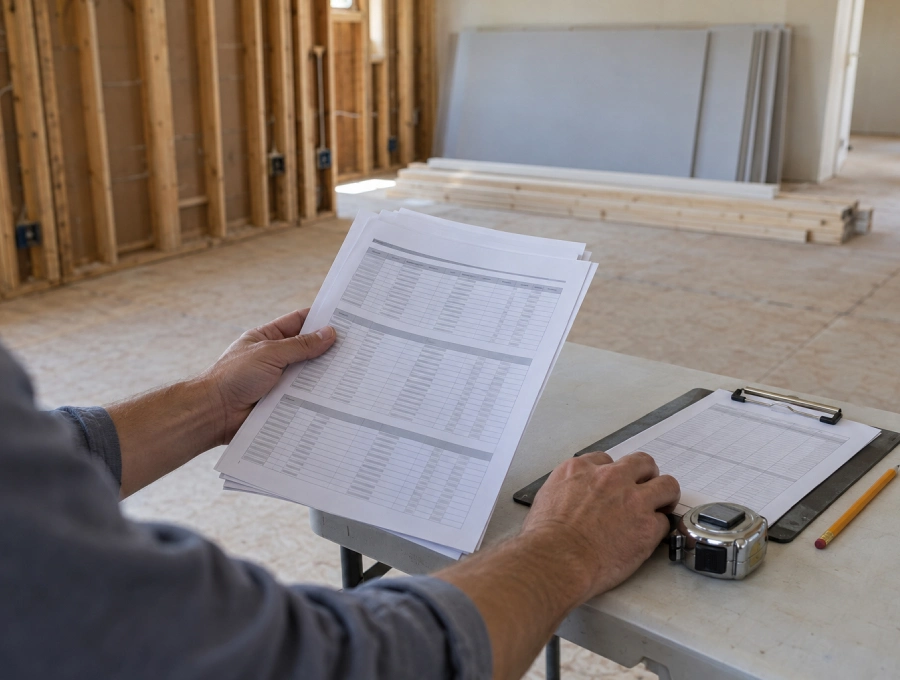
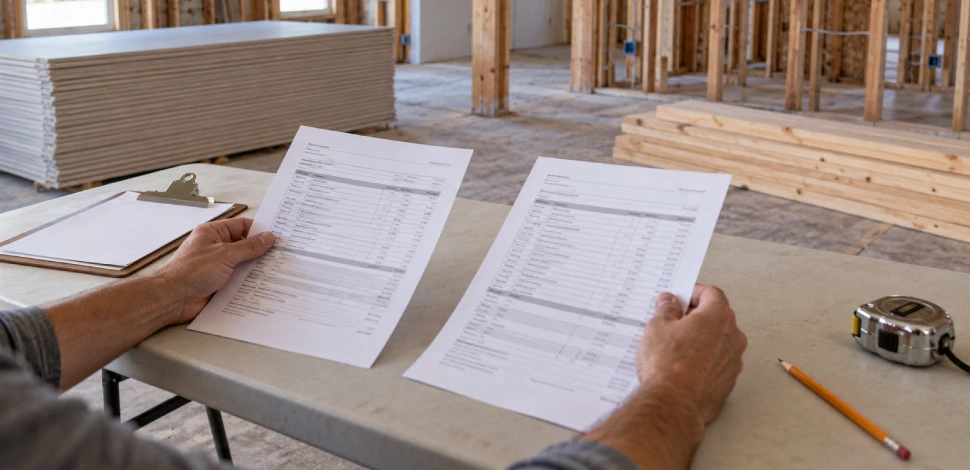
Place the insurance estimate and contractor estimate side by side. Confirm whether both documents include the same:
- Affected rooms and building areas
- Measurements and material quantities
- Drywall, insulation, ceilings, and paint
- Flooring, underlayment, and subfloor work
- Cabinetry, countertops, doors, trim, and finish carpentry
- Framing or structural components
- Plumbing, electrical, or HVAC coordination
- Permits, inspections, and debris handling connected to the rebuild
- Material quality and finish specifications
The Maine Bureau of Insurance advises homeowners to obtain detailed contractor estimates that clearly identify cost, scope, materials, and quantities. A short lump-sum description does not give the homeowner or carrier enough information to understand what the contractor proposes to rebuild.
What a Reconstruction Contractor Can Do
A reconstruction contractor can help define the construction side of the project. Depending on the property and stage of the claim, Octagon Construction & Energy may:
- Review the visible rebuild needs after mitigation
- Compare the approved scope with the areas that require reconstruction
- Identify construction items that appear different or absent
- Document visible construction conditions
- Prepare reconstruction estimate or scope information when appropriate
- Complete the reconstruction work after the scope is ready to proceed
What a Reconstruction Contractor Cannot Decide
The contractor does not decide what an insurance policy covers. Octagon Construction & Energy does not:
- Determine coverage
- Negotiate the insurance claim
- Act as a public adjuster
- Guarantee that additional items will be approved
- Settle a dispute between the homeowner and carrier
When the estimates do not match, the homeowner should ask the carrier how it reviews construction-related documentation and proposed scope differences. The process depends on the policy, carrier, property conditions, and supporting documentation.
What to Do Before Reconstruction Begins
- Get complete copies of both estimates.
- Compare the work, quantities, and specifications—not only the totals.
- Ask the contractor to explain items that appear in one document but not the other.
- Gather mitigation records, photographs, moisture or drying documentation when available, and information about materials that were removed.
- Ask the carrier what documentation it requires to review construction-scope differences.
- Clarify which items are approved before authorizing claim-funded reconstruction work.
Do not assume that a higher contractor estimate automatically changes the approved insurance amount. The carrier must review any additional construction-related information according to the policy and claim process.
What to Send Octagon for an Initial Reconstruction Discussion
You do not need to organize a perfect project file before contacting us. The most useful information is:
- Property address or town
- What caused the damage
- Whether mitigation and drying are complete
- What materials or building areas were removed
- The insurance estimate or approved scope, if available
- The contractor estimate or proposal being compared
- Photographs and mitigation documentation, if available
This information helps our team understand where the property is in the recovery process and whether it is ready for reconstruction review.
A Maine and New Hampshire Reconstruction Example
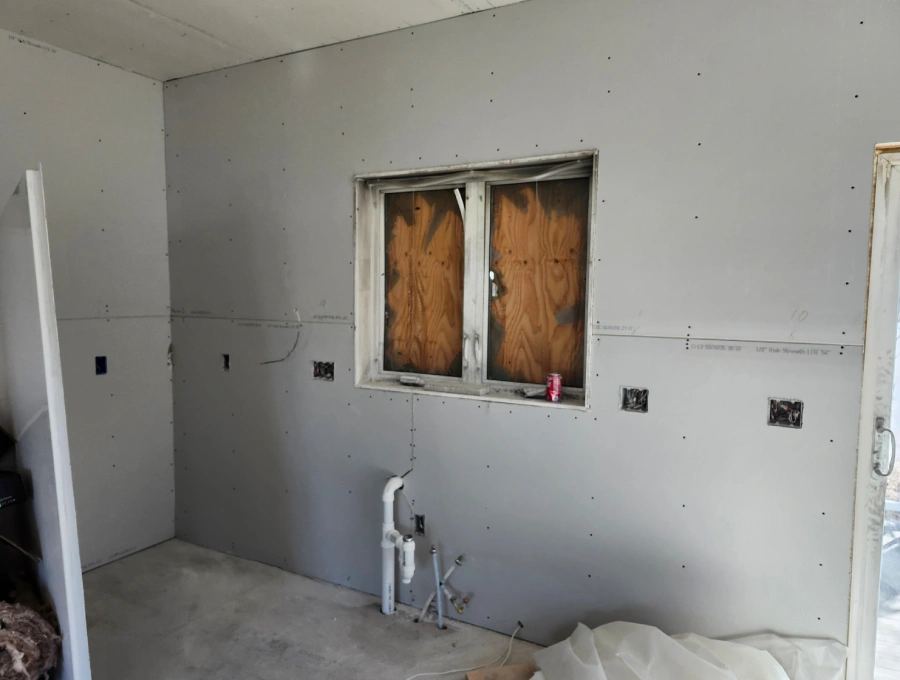
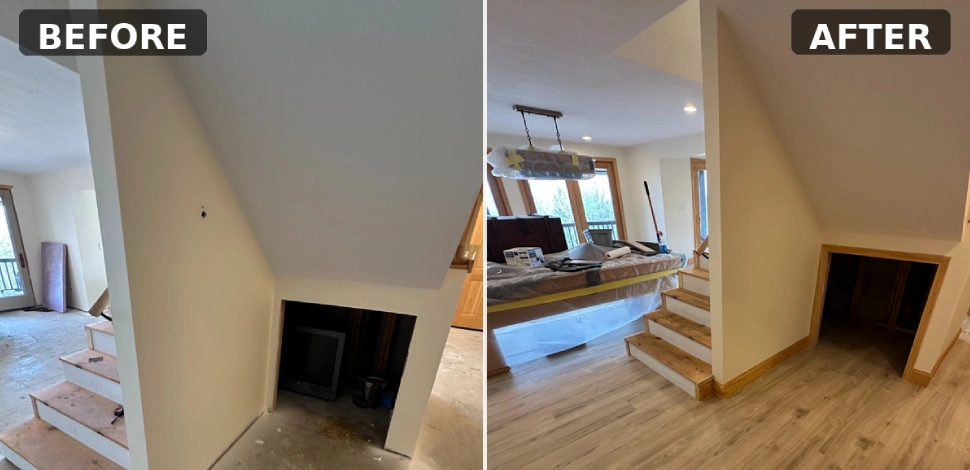
After a burst pipe affected a finished basement in Conway, New Hampshire, mitigation was completed and the space was dried before reconstruction began. The documented rebuild included insulation, drywall, flooring, finish carpentry, cabinetry work, plumbing fixture resets, painting, and final cleaning.
The project shows why a reconstruction scope must describe the full sequence of work required to return an affected space to use—not only one visible repair.
When to Contact Octagon Construction & Energy
Contact Octagon when:
- Mitigation is complete or nearing completion
- The home has been opened, gutted, or left unfinished
- You have an insurance scope or contractor estimate to review
- The two documents do not appear to describe the same rebuild
- You need a reconstruction contractor for the next phase
Octagon Construction & Energy rebuilds homes and properties after water, fire, and structural damage across Maine and New Hampshire. We begin after mitigation and stabilization, work from documented conditions and approved scope, and focus on returning the affected areas to a safe, usable condition.
Octagon Construction & Energy is fully insured and backs its reconstruction work with a one-year workmanship warranty.
Learn more about insurance reconstruction services in Maine and New Hampshire.
For the complete claim-to-rebuild sequence, read the insurance reconstruction process after claim approval.
Review what affects reconstruction cost before comparing final totals.
If the loss involved water, review Octagon’s water damage reconstruction services.
Tell Us What Happened
Send us a few details about the property, the damage, and the stage of your insurance claim, and we’ll get back to you to talk through the rebuild.
Prefer to talk now? Call (207) 310-4163.
Frequently Asked Questions
01. Why is my contractor’s reconstruction estimate higher than the insurance estimate?
The documents may include different rooms, measurements, quantities, materials, trades, or construction conditions. Compare the scope line by line to identify the specific differences.
02.Does a higher contractor estimate mean the insurer will pay more?
The carrier decides coverage and whether additional construction-related items are approved. Ask the carrier what documentation it requires for that review.
03. Can Octagon prepare reconstruction information for carrier review?
When appropriate, Octagon can review visible rebuild needs and prepare reconstruction estimate or scope information. Octagon does not determine coverage, negotiate claims, or guarantee approval.
04. Should reconstruction start before the scope differences are addressed?
For claim-funded work, clarify the approved scope and responsibility for any additional items before those items proceed. Actual reconstruction should follow the approved scope and documented project conditions.
05. Does Octagon handle water extraction or emergency mitigation?
Octagon Construction & Energy focuses on reconstruction — the rebuild that follows once mitigation, cleanup, drying and stabilization are complete. Water extraction and emergency response are handled by a separate mitigation company.
06. Can I contact Octagon before mitigation is finished?
Yes. You may send the project details while mitigation is still underway. Octagon can follow up as the property approaches the reconstruction stage.