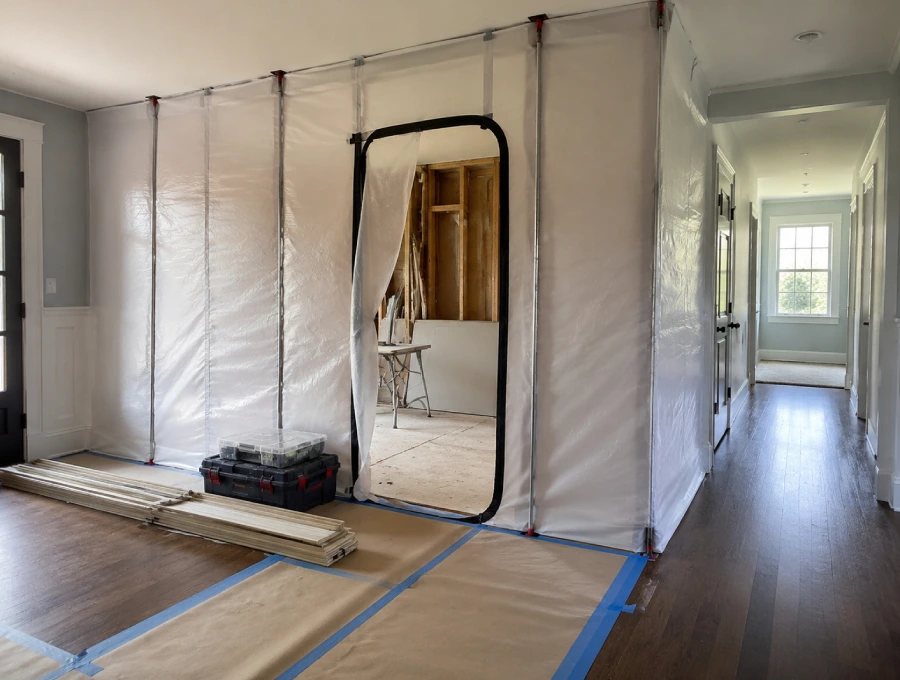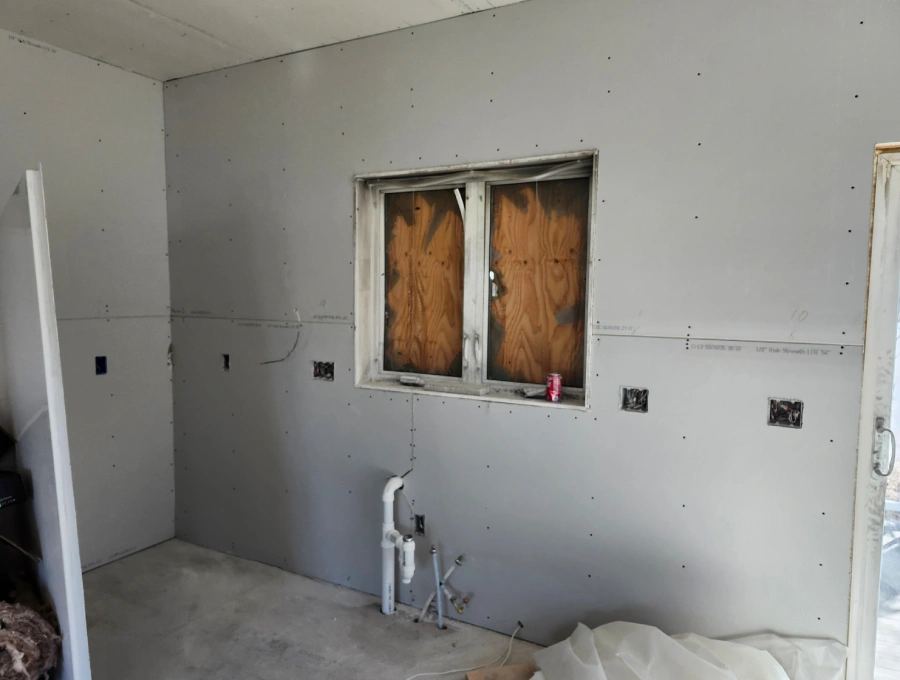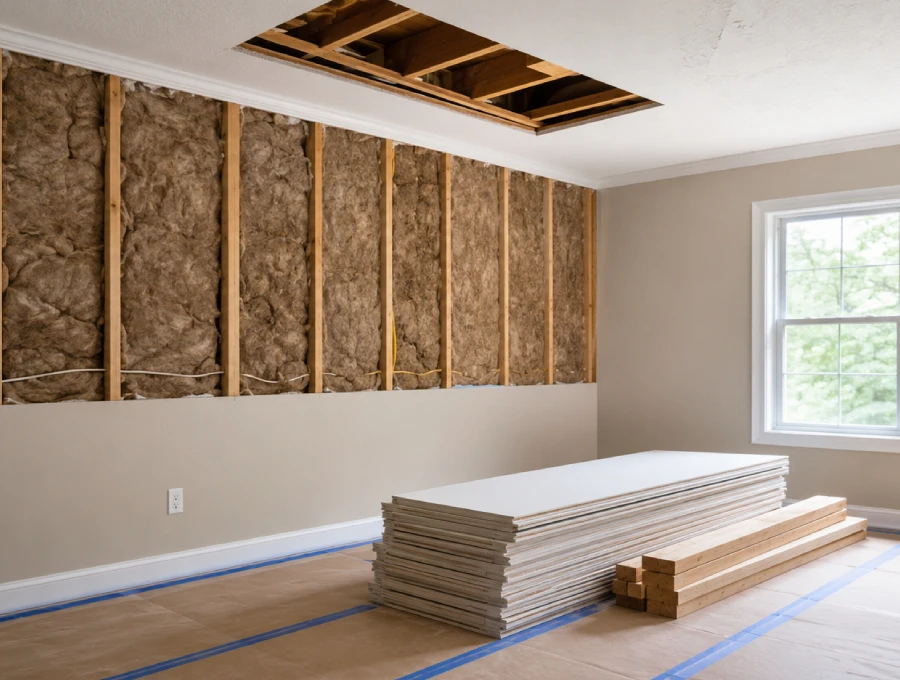
Once fire cleanup and mitigation are complete, many homeowners are left with a property that is stabilized but not yet ready for normal use. The next question is usually which damaged building components must be rebuilt.
This guide explains what may need reconstruction after a fire, including walls, ceilings, insulation, flooring, framing, roofing components, and areas affected by firefighting water. Property owners whose approved scope includes rebuilding can review Octagon Construction & Energy’s fire damage reconstruction services for the next phase.
Quick Answer
After fire cleanup, reconstruction may include damaged drywall, ceilings, insulation, flooring, framing, roofing components, and interior finishes. The exact rebuild scope depends on heat, smoke, water, structural conditions, code requirements, and the approved insurance documentation.
When Fire Damage Becomes a Reconstruction Project
Fire damage transitions into a reconstruction project when affected materials can no longer remain in place or be safely repaired. This typically includes:
- Damaged drywall or ceiling systems that cannot be safely repaired
- Smoke-damaged interior finishes that retain odor or contamination
- Insulation affected by heat or smoke penetration
- Flooring systems damaged by fire exposure or firefighting water
- Framing or roof structures weakened by heat stress
- Areas affected by firefighting water may require water damage reconstruction after mitigation and drying are complete
- Insurance scope requiring removal and full replacement of materials
At this stage, the focus shifts from surface repair to full structural and interior rebuilding based on safety requirements, building codes, and approved insurance documentation.
What Usually Happens After Fire Mitigation
Fire mitigation is the initial emergency phase of property recovery. It focuses on stopping further damage and stabilizing the structure. Once mitigation is complete, the reconstruction phase begins.
Octagon Construction & Energy focuses on the reconstruction phase after emergency cleanup and mitigation are complete.
This process typically includes:
- Emergency response and fire suppression completed first
- Removal of damaged, burned, or unsafe materials from the structure
- Evaluation of smoke-affected or heat-exposed building components
- Assessment of structural stability and rebuild readiness
- Transition into reconstruction phase once the property is stabilized
- Reconstruction based on approved insurance scope and verified site conditions
At this stage, the property is safe from immediate risk but still not fully rebuilt or livable.
Common Fire Reconstruction Areas
Fire damage rarely impacts only one part of a home. Heat, smoke, and water often spread through interconnected building systems, requiring multi-area reconstruction. Common reconstruction areas include:
- Interior walls and ceilings
- Flooring systems and subfloor structures
- Trim and finish carpentry elements
- Affected framing components that may require structural reconstruction
- Roof and attic assemblies
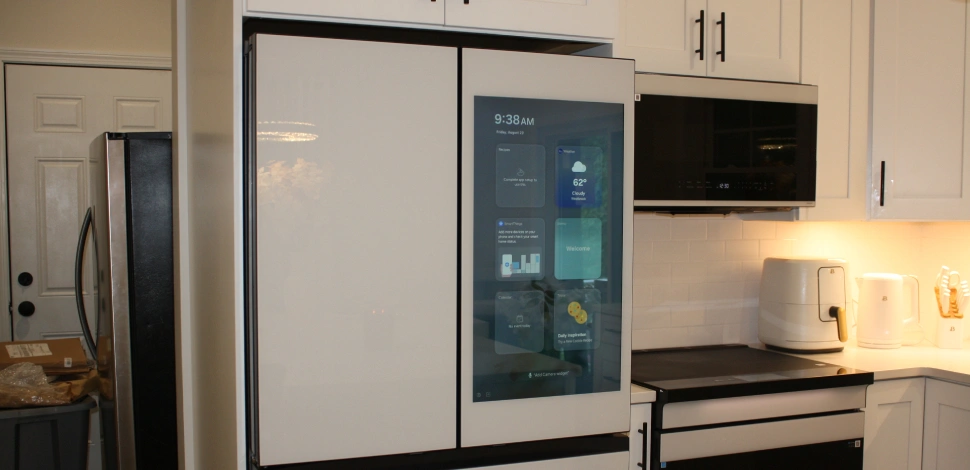
- Kitchen and living spaces
- Smoke-affected rooms throughout the property
- Areas impacted by firefighting water intrusion
Even localized fire events often result in broader reconstruction needs once full damage assessment is completed.
Insurance and Fire Damage Reconstruction
Insurance reconstruction is guided by an approved scope of work issued by the insurance carrier. This scope typically defines:
- Approved materials for replacement
- Labor categories and construction quantities
- Covered structural and interior components
Octagon Construction & Energy works directly from the approved reconstruction scope and aligns rebuilding with real conditions identified during the construction phase. When additional construction-related damage is discovered during rebuilding, it may be documented and submitted for carrier review as part of the reconstruction process. This ensures that the final rebuild reflects both approved coverage and actual site conditions.
Maine and New Hampshire Fire Damage Considerations
Fire reconstruction in Maine and New Hampshire is influenced by several regional factors that impact planning and execution. These include:
- Older residential structures with mixed framing systems
- Seasonal or vacant properties where damage may go unnoticed longer
- Wood-frame construction commonly used across the region
- Attached garages that increase fire spread complexity
- Cold-weather conditions that can affect rebuilding schedules
- Municipal permitting requirements that vary by town or city
These factors do not change the reconstruction process itself, but they can significantly affect timelines, material planning, and project coordination.
Why Fire Damage Often Requires Reconstruction
Fire damage often extends beyond visible surfaces due to how heat, smoke, and water interact with building materials. Reconstruction is frequently required because:
- Smoke particles penetrate porous materials such as drywall and insulation
- Heat can weaken structural framing without visible surface damage
- Firefighting water can saturate flooring and structural systems
- Insulation and wall assemblies often lose performance after exposure
- Building codes may require replacement rather than repair in affected areas
Because of these conditions, fire damage is rarely limited to cosmetic repair and often requires structured reconstruction to rebuild the home properly.
Need Fire Damage Reconstruction in Maine or New Hampshire?
Need reconstruction after fire damage in Maine or New Hampshire? Octagon Construction & Energy can review the approved insurance scope, assess the rebuild needs, and help move the property from mitigation to reconstruction.
Frequently Asked Questions
- What is fire damage reconstruction?
Fire damage reconstruction is the process of rebuilding structural and interior components of a home damaged by fire, smoke, heat, or firefighting water. - What parts of a home usually need rebuilding after fire damage?
Walls, ceilings, flooring systems, framing, insulation, roofing components, and interior finishes are commonly rebuilt. - Does insurance cover fire damage reconstruction?
Yes, when included in the approved insurance scope of work issued by the carrier. - What is the difference between fire cleanup and fire reconstruction?
Cleanup removes damaged materials and stabilizes the property, while reconstruction rebuilds structural and interior systems. - How long does fire damage reconstruction take?
Most projects take several weeks depending on scope, permits, material availability, and project complexity. - Can smoke damage require reconstruction?
Yes, smoke penetration can require replacement of insulation, drywall, and other interior materials.