The water may be gone and surfaces may look dry, but that does not confirm the condition of hidden structural components.
Structural damage after water intrusion may develop inside subfloors, framing, and wall assemblies after surface drying. In Maine and New Hampshire, older properties, basement conditions, coastal exposure, and seasonal freeze-thaw cycles may affect how moisture moves through building materials.
This type of hidden damage may continue affecting structural systems and may increase the scope of reconstruction over time.
Hidden structural conditions may not be identifiable from surface appearance alone and may require a visible-condition review.
This is not a surface-level issue. It is a structural condition that may require reconstruction depending on documented conditions and project scope.
What is Structural Damage After Water Intrusion?
Structural damage after water intrusion may occur when moisture affects subfloors, framing, or other structural components beneath the surface, including after visible drying is complete.
Water intrusion may affect structural materials, alignment, and long-term performance depending on severity, duration, and the systems involved.
Why Structural Damage After Water Intrusion Happens
Water may not dry evenly across layered building materials.
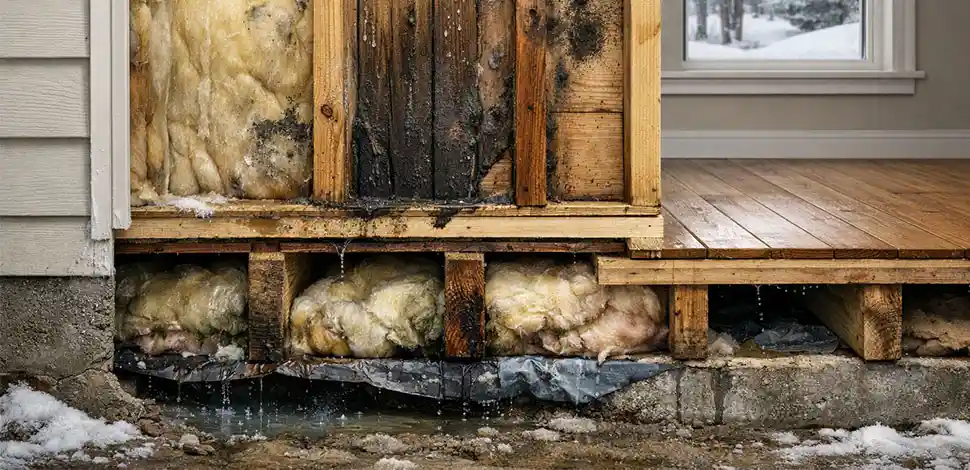
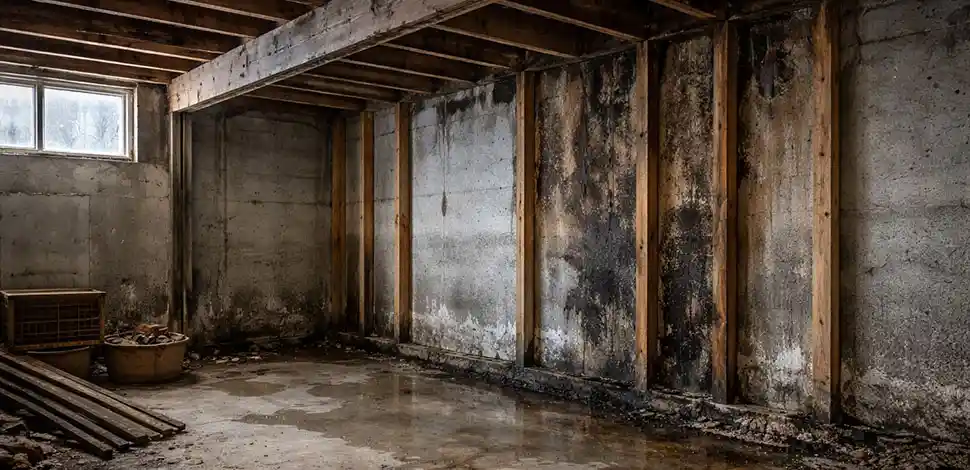
It may move through seams, joints, and layered materials and remain in hidden structural zones. In Maine and New Hampshire, several local factors increase this risk:
- Coastal humidity exposure
- Snowmelt and groundwater saturation
- Older New England basement structures
- Freeze thaw cycles that trap moisture inside materials
This type of damage may extend beyond visible materials and affect subfloors, framing, or other structural components.
These conditions may allow moisture to remain inside structural systems after surfaces appear dry.
Similar conditions may occur after basement flooding, where water intrusion affects structural materials. For related context, see flooded basement repair guidance.
How Water Affects Structural Systems
Subfloor Systems
Subfloors can absorb water and may swell, soften, or lose performance. The extent of rebuilding depends on documented conditions after affected areas are opened.
Framing Components
Framing supports the structure. Moisture exposure may affect material strength, alignment, or stability depending on severity and duration.
Wall and Insulation Assemblies
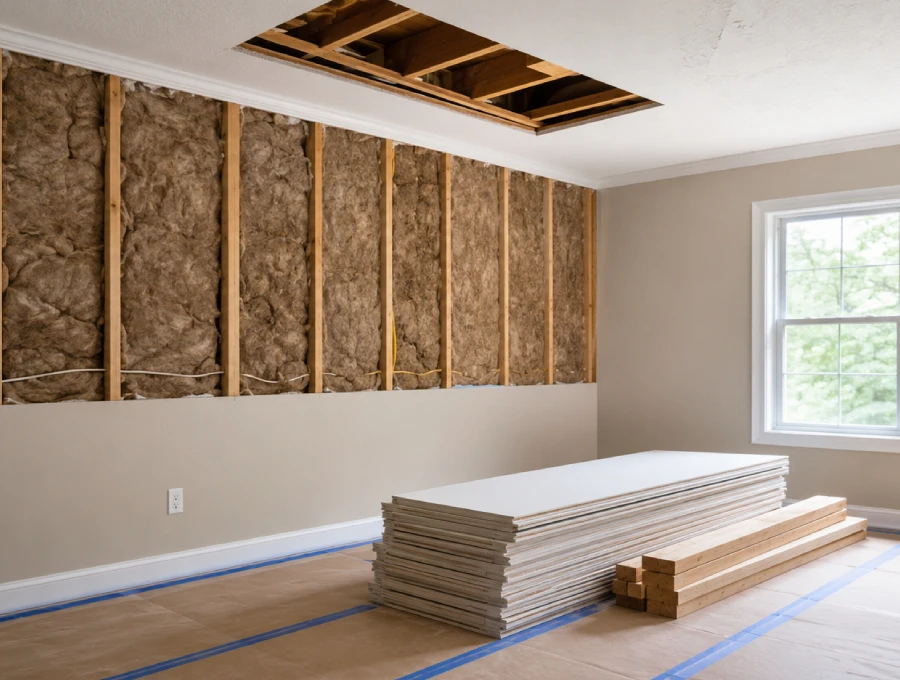
Moisture trapped inside walls may spread across materials. Insulation can retain moisture, and affected wall assemblies may require reconstruction based on documented conditions.
Moisture exposure may reduce material performance depending on the material, severity, and duration of exposure.
The effect on structural performance depends on the materials involved and the extent of exposure.
Signs of Structural Damage After Water Intrusion
Watch for:
- Soft or uneven flooring
- Doors and windows no longer align
- Persistent indoor humidity
- Recurring stains after drying
- Slight sagging or flex in floors
These signs may reflect more than a cosmetic issue and may indicate deterioration within structural systems.
Can Structural Damage Spread After Water Intrusion?
Moisture trapped inside structural systems may continue affecting materials over time, even after surfaces appear dry.
What Happens If Structural Damage Is Ignored
Unaddressed structural damage may continue to affect the rebuilding scope.
Ongoing moisture exposure may continue affecting materials. Subfloors may soften, framing may deteriorate, and the reconstruction scope may expand depending on documented conditions.
Some structural concerns become apparent only after flooring, walls, or framing are opened and reviewed.
Areas that appear stable may still require reconstruction when documented conditions show deterioration or affected structural components.
What begins as a localized issue may expand into a larger reconstruction project affecting multiple structural systems.
Insurance coverage decisions depend on the policy, cause of loss, documentation, and carrier review. OCE does not determine coverage or guarantee approval.
How Long Does Structural Damage Take to Develop?
The timing varies by material, exposure duration, hidden conditions, and when affected systems are opened for review.
Because timing varies, reconstruction may still be needed even when surfaces initially appear dry.
When Reconstruction May Be Required
Reconstruction may be required when:
- Structural materials lose load-bearing strength
- Subfloors remain soft or unstable
- Framing components are compromised
- Moisture affects multiple structural layers
At this stage, surface repairs may not address the full scope of affected systems.
If water intrusion caused the issue, rebuilding may also require water damage reconstruction before finishing work begins.
Material selection also affects the rebuild. See modern materials used in reconstruction for factors that influence reconstruction-material choices.
Cost Impact of Delayed Structural Repair
Delaying a visible-condition review may increase project complexity and potential costs.
Early-stage issues may require limited repair.
If ignored, damage may spread across multiple systems, leading to increased reconstruction scope, additional labor, and longer timelines.
Common Mistakes to Avoid
Avoid:
- Assuming drying resolves all structural issues
- Ignoring hidden structural components
- Delaying a visible-condition review
- Repairing only visible damage
- Failing to align reconstruction with insurance scope
When to Discuss Reconstruction Needs
You should discuss reconstruction needs when:
- Flooring feels unstable
- Doors or windows shift or misalign
- Water intrusion may still be affecting internal systems
- Structural components may be compromised
How This Damage Expands in Real Homes
In many homes across Maine and New Hampshire, structural damage after water intrusion begins as a localized issue and may gradually spread across multiple systems.
What starts as minor moisture exposure may lead to:
- Structural weakening in subfloors and framing
- Expansion of damage across walls and insulation
- Increased reconstruction scope
Early review of visible conditions may help identify potential issues before reconstruction scope expands.
Discuss Your Reconstruction Project
If water intrusion may have affected framing, subfloors or other structural components, discuss the reconstruction needs with Octagon Construction & Energy.
FAQ
What is structural damage after water intrusion?
Structural damage after water intrusion may involve deterioration or reduced performance in subfloors, framing, or other structural components affected by moisture.
What are early signs?
Possible signs include uneven or soft flooring, doors or windows that no longer align, recurring stains, or visible movement in affected areas.
Can drying fix structural damage?
Drying may remove moisture, but it does not repair structural damage that has already affected building components.
How long does damage take to appear?
The timing varies by material, exposure duration, hidden conditions, and when affected systems are opened for review.
Is it covered by insurance?
Coverage depends on the policy, cause of loss, documentation, and carrier decision.